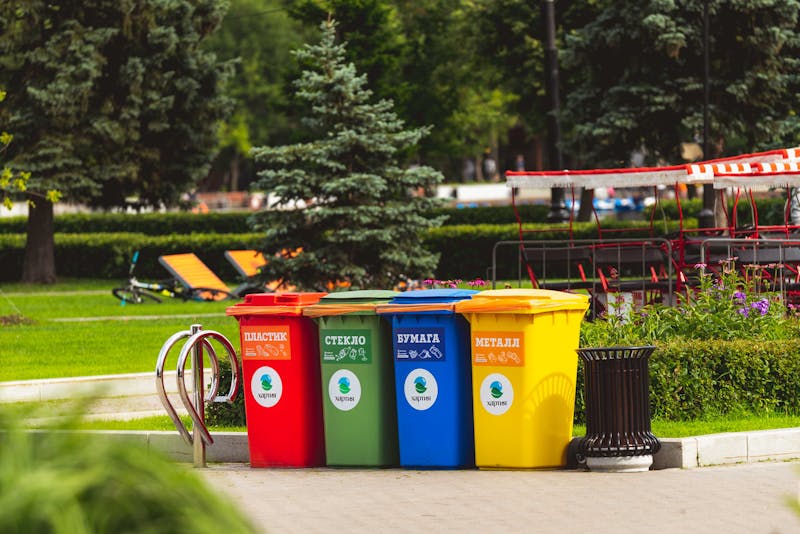
In the silent corners of alleyways and beneath neon lights, trash cans quietly reveal who we are.
Where Trash Speaks Louder Than Words
Take a walk down any city street—not for the architecture or the fashion, but for the trash. The bins, their contents, their labels, and even their overflow tell a story far deeper than skyline silhouettes. In these mundane containers lies a reflection of urban life, values, and priorities. Garbage, often dismissed, becomes a mirror of our collective soul.
Sorting Waste, Sorting Minds
In cities like Tokyo or Zurich, where garbage is meticulously sorted and categorized, you can sense a collective mindfulness. Residents memorize disposal calendars, wash yogurt containers before tossing them, and fold boxes flat with almost meditative precision. This isn’t just about hygiene or compliance—it’s about respect: for the environment, for each other, and for the system. The act of sorting trash becomes an expression of civic duty.
In contrast, cities where trash is heaped indiscriminately, where bins are scarce or perpetually overflowing, may reflect systemic neglect or social detachment. The mess hints not just at underfunded sanitation services, but perhaps at fractured civic trust or disengagement.
Recycling as a Cultural Pulse
Recycling isn’t just a policy—it’s a pulse check. In places with robust bottle return programs or community recycling stations, there's often a visible pride in participation. People don't just recycle because they must, but because they see themselves as part of something larger. The ritual of returning bottles or separating compost from plastic is woven into daily life, signaling a culture that values responsibility and long-term thinking.
Conversely, in environments where recycling is met with apathy, the bins often reflect an unconscious nihilism—what difference does it make? Why bother? This sentiment, festering beneath the surface, can be more telling than any survey or census.
Trash as a Social Equalizer
Another curious lens is how trash unites or divides. In wealthier districts, recycling bins may be pristine, camouflaged into sleek urban designs. In marginalized neighborhoods, they may be broken, overflowing, or absent altogether. This discrepancy underscores deeper societal divides. But ironically, the scavengers—those who sift through refuse for recyclables—highlight a strange equilibrium. Their role, while often overlooked, keeps the cycle going, forcing society to confront the inconvenient truths of consumption and inequality.
The Aesthetics of Disposability
How we throw things away also reveals what we value. Single-use plastics, fast fashion tossed with tags still on, or excessive packaging all speak of a culture of disposability. The idea that things—and perhaps people—can be discarded easily suggests a mindset where convenience trumps consideration. Conversely, a city where repair cafes thrive, where reuse is celebrated, suggests a populace tuned into sustainability and care.
Listening to the Litter
Urban trash is not just debris—it’s data. It tells us what people eat, how they consume, what they ignore. Food waste volumes may hint at abundance or disregard, while an absence of cigarette butts might indicate effective public health campaigns. Every wrapper, bottle cap, and broken appliance becomes a data point in the psychological map of the metropolis.
By observing what people discard, and how they do it, we access an unfiltered dialogue with the city’s psyche. Are we hurried and careless, or thoughtful and deliberate? Are we collectively engaged in our space, or detached from its fate?
A Call to Consciousness
What if we treated trash not as an end, but as a beginning—a place to initiate conversations about care, connection, and community? What if our cities designed waste systems not just for function, but to inspire? Transparent bins, public data visualizations of waste patterns, or neighborhood composting events could transform the invisible act of disposal into a visible act of identity.
Ultimately, the trash can becomes a totem. It asks not only what we throw away, but what we hold onto—and why.
So next time you pass a bin, pause. It might just be whispering the truths we’re too busy to hear.