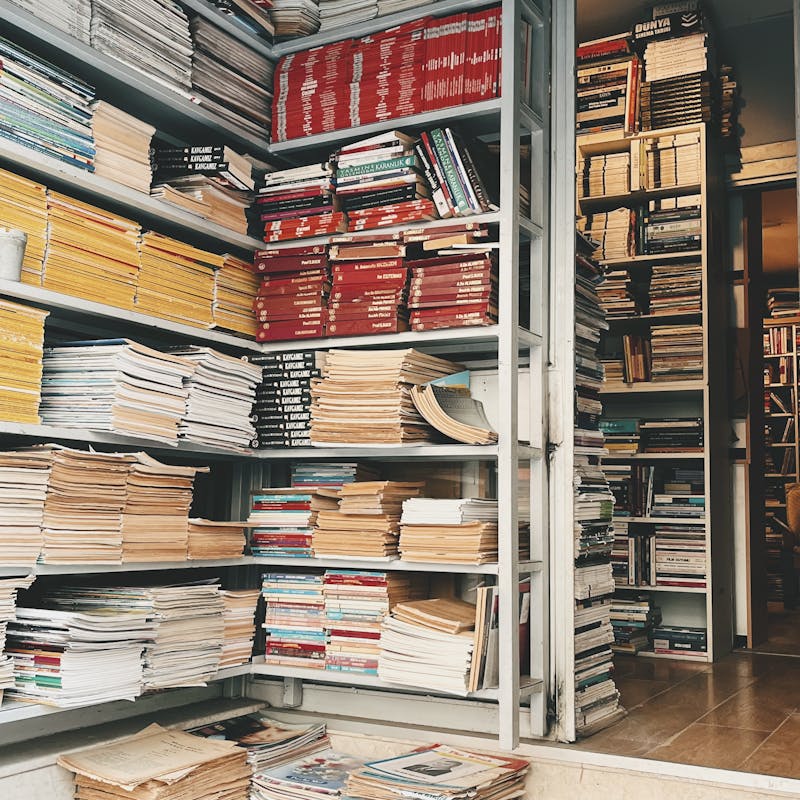
The tiniest leftovers are often the loudest witnesses.
A cracked phone screen in a desk drawer. A forgotten group chat. A receipt tucked into a paperback like a pressed leaf. If a museum display can make a century feel close, it’s often because of these small, almost accidental keepsakes—objects and fragments that weren’t made to last, and definitely weren’t made to explain themselves.
Now imagine future historians trying to understand our era. They’ll have the big stuff, of course: legislation, wars, corporate records, bestselling books. But if they want to know what a Tuesday felt like—what people feared, desired, pretended not to care about—they may find the clearest answers in the smallest archives.
The meaning hiding in the mundane
Official histories tend to speak in confident voices. They summarize, tidy, and label. Small archives do the opposite. They’re messy and personal, shaped by chance.
Think about what a single grocery list can reveal. Not just the items, but the handwriting, the substitutions, the brand loyalty, the one indulgence circled twice. On its own it’s nothing; placed among a hundred other lists from the same neighborhood, it becomes a portrait of taste, inflation, health anxieties, and convenience culture.
Even the way we name things—“almond milk” instead of “milk alternative,” “protein bar” instead of “candy”—is a form of self-storytelling. These artifacts record the gap between what we consume and how we want to be seen consuming it.
Digital crumbs as tomorrow’s primary sources
The most abundant small archives of our time aren’t paper at all. They’re digital crumbs: timestamps, edits, deleted drafts, photo metadata, app notifications, and “seen at 9:41 PM.”
A future historian studying a decade might not need a politician’s memoir as much as a dataset of auto-corrected texts. Those tiny corrections could chart how language shifts, which slang gets absorbed into the mainstream, and how quickly new norms travel. The casual “lol” and the cautious “just checking in” carry emotional weather.
Consider the quiet power of a saved voice note. It captures tone, fatigue, performance, and intimacy in a way transcripts can’t. Or the algorithmically curated “memories” feature that resurfaces a photo from eight years ago. It doesn’t just preserve the past; it actively reorganizes it, telling us what was worth keeping—sometimes without our consent.
What gets saved when nobody is trying to save it
Traditional archives are intentional. Someone selects what matters. But the most revealing records can be accidental, the byproduct of living in systems designed to log.
A ride-share history shows where a city’s stress points are: airports at dawn, hospital routes after midnight, the neighborhood bar that becomes a recurring coordinate on Fridays. A calendar full of “quick call” blocks hints at a culture of perpetual partial attention. A fitness tracker’s gaps and surges can map the body’s relationship to work, ambition, shame, and recovery.
The smallest archives also include the physical micro-traces of modern life: contactless cards worn smooth, packaging that promises “clean” ingredients, the blue light glow in family photos, the silence of empty retail spaces. Future historians might read our landscape the way archaeologists read pottery shards—studying what we threw away because it seemed too ordinary to keep.
The politics of disappearance
There’s a twist, though. The smallest archives are both plentiful and fragile.
Digital life feels permanent until it isn’t. Platforms shut down. File formats become obsolete. Passwords die with their owners. A decade can vanish when a cloud service changes terms or a device stops turning on.
At the same time, what gets preserved is rarely neutral. Some communities leave thick records because their lives are constantly documented—by authorities, by media, by surveillance. Others disappear because they’ve learned that documentation can be dangerous. Silence can be strategy.
So the question for future historians won’t simply be “What did people do?” It will be “Who had the power to leave traces, and who needed to erase them?” The small archives of our era may contain as much evidence of caution as they do of expression.
Reading feelings, not just facts
Big archives are good at proving events. Small archives are better at revealing moods.
A streak of late-night searches—symptoms, side effects, “is this normal,” “how to apologize”—is a kind of emotional diary. So is the pause before sending a message, the draft that never becomes a post, the photo taken but not shared. These are records of internal negotiations: between sincerity and image, between loneliness and pride.
Even our entertainment choices act like cultural seismographs. The sudden popularity of comfort shows, the endless rewatching of familiar plots, the rise of “cozy” as an aesthetic—these patterns suggest collective fatigue and the desire for softer edges.
If future historians are patient, they’ll learn to read these traces as signals rather than trivia. They’ll treat everyday artifacts as literature: not because they are polished, but because they are honest in their offhandedness.
Curating ourselves for people we’ll never meet
There’s a peculiar modern awareness that our lives are being archived, even when we’re not famous. We take photos with future nostalgia in mind. We caption moments to control how they’ll be interpreted. We clean up our feeds, present a coherent self, and hope that coherence passes for truth.
That impulse creates its own kind of historical distortion. When everyone becomes their own publicist, the archive becomes glossy. The interesting parts—the contradictions, the boredom, the quiet resentment—move offstage.
And yet, the smallest archives resist total control. The unflattering angle. The accidental reflection in a window. The typo that reveals haste. The unremarkable receipt that exposes the real price. These are the pinholes that let reality leak through.
A future built from fragments
Someday a historian may hold a pile of our ordinary days: a half-broken phone, a folder of screenshots, a stack of shipping labels, a playlist titled “don’t think.” They’ll try to assemble a society from what we didn’t consider important.
Maybe the most human thing about our era is that we are surrounded by records, yet still uncertain about what they mean. We document constantly, but we don’t always remember. We preserve, but we also curate. We share, but we also delete.
The smallest archives will not offer a clean story. They will offer something better: a textured one. A record of how people lived between headlines—making dinner, scrolling at midnight, rewriting messages, keeping receipts, trying to feel okay. And in those tiny traces, the future might find us not as icons of a time period, but as complicated, recognizable strangers.