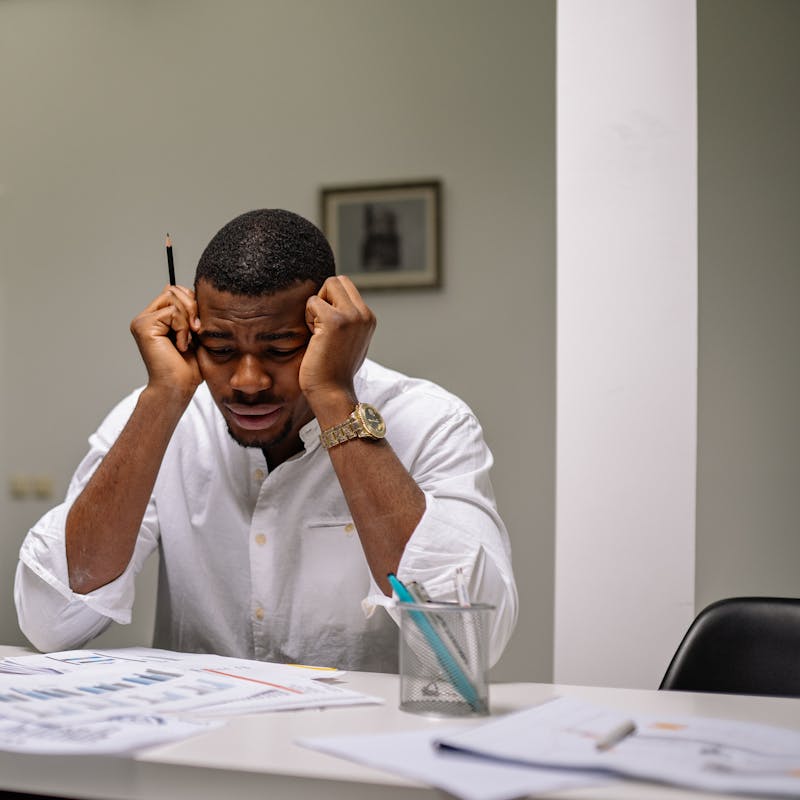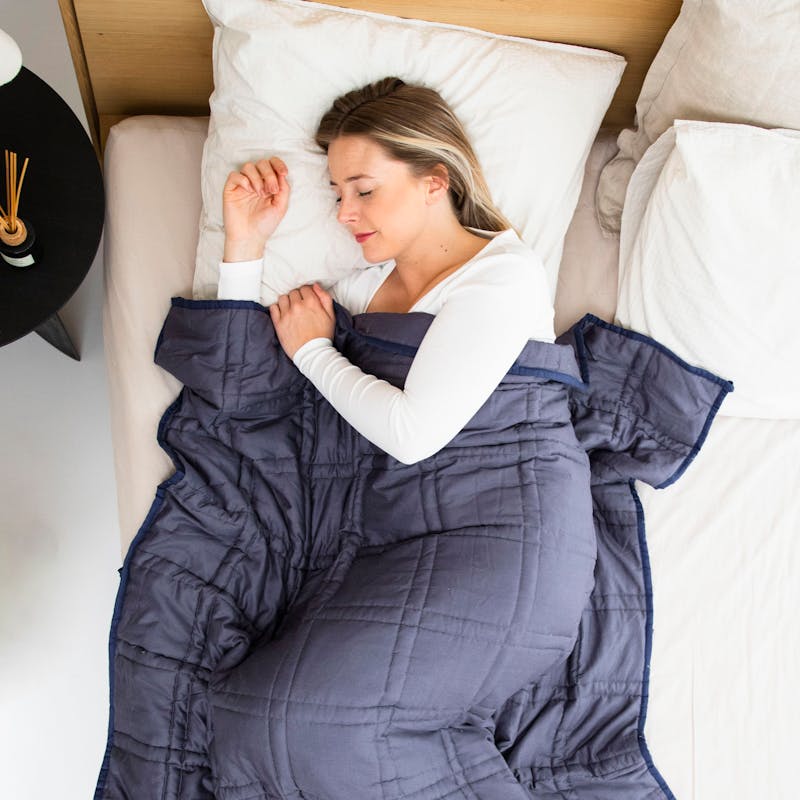
Some nights, the more you chase rest, the louder your mind gets.
Sleep is supposed to be the universal fix: get more of it and you’ll feel steadier, calmer, more resilient. Yet many people notice a strange twist—improving their schedule or spending more time in bed can make them feel more keyed up. Understanding the relationship between sleep and anxiety helps explain why “better rest” sometimes seems to worsen worry, and what to do when sleep hygiene turns into another source of pressure.
The two-way loop of sleep and anxiety
Sleep and anxiety influence each other in both directions. Anxiety can keep you alert when you want to unwind, while poor sleep makes the brain more reactive the next day, lowering patience and raising threat sensitivity. In other words, bad sleep doesn’t only make you tired; it can make everyday problems feel more urgent and personal.
But the loop also contains a paradox: when someone starts prioritizing sleep intensely—strict bedtimes, tracking devices, rules about food, light, and screens—sleep becomes a performance. For an anxious brain, performance invites monitoring. Monitoring invites worry.
Why can “better sleep” make anxiety feel worse?
It usually isn’t that sleep itself increases anxiety. It’s that the process of trying to sleep perfectly can activate the same mental habits that fuel worry.
First, there’s sleep effort. When you decide that sleep must happen, right now, the body often does the opposite. Sleep requires a drop in vigilance; effort increases vigilance. Many people experience this as lying in bed doing mental math: “If I fall asleep in 20 minutes, I’ll get 6 hours and 10 minutes…” That calculation is anxiety in a lab coat.
Second, improved rest can make emotions feel clearer. When you’re chronically exhausted, feelings can become blunt and foggy. With more consistent sleep, you may suddenly notice sharper emotional detail—sadness, irritation, worry—because you have the energy to perceive it. That can be unsettling if you expected sleep to erase the feelings entirely.
Third, when people begin sleeping longer, they sometimes spend more time awake in bed. Wakefulness plus darkness plus quiet is a powerful stage for rumination, especially if the bed has become associated with thinking.
Is it anxiety about sleep—or anxiety showing up at bedtime?
Often it’s both, but the difference matters. Sleep anxiety is fear about not sleeping and the consequences—messing up tomorrow, losing control, “breaking” your health. General anxiety at bedtime is the mind finally getting silence after a full day of distraction.
A useful clue is what your thoughts sound like. If they’re about sleep itself (“What if I can’t fall asleep?”), you’re dealing with conditioned arousal around bedtime. If they’re about life (“Did I offend my boss?”), bedtime is simply when your mind has room to roam.
Either way, the goal isn’t to force the mind to shut off. It’s to reduce the stakes and change the association between bed and mental work.
When sleep hygiene turns into a rulebook
Sleep hygiene is helpful until it becomes brittle. The anxious mind loves rules because rules promise certainty. But sleep is not fully controllable, and rules that can’t guarantee an outcome often backfire.
Consider the person who starts wearing blue-light glasses at 7 p.m., stops drinking coffee entirely, keeps the bedroom at an exact temperature, and still has a rough night. Instead of thinking, “Bodies are variable,” they think, “I must be missing something.” The search for the missing piece becomes another nighttime ritual.
This is where devices can quietly worsen things. Sleep trackers provide data, but anxious people tend to treat data as a verdict. A night that felt okay can be reinterpreted as a disaster after seeing a low score, which increases dread about the next night and keeps the cycle going.
A calmer approach to sleep when worry is loud
The most effective shift is often philosophical: aim for sleep opportunity rather than sleep control. You can control your wind-down, your environment, and your consistency. You can’t command unconsciousness.
If you’re awake for a while, it can help to remove the “I’m failing” narrative. Getting out of bed briefly—dim light, quiet activity, no doom-scrolling—can break the link between the bed and rumination. The bed becomes for sleep, not for wrestling your thoughts.
It also helps to treat worries like mental weather. Instead of answering every anxious question, practice letting some questions remain open. The mind may protest, but it also learns: not every thought requires action.
For many people, structured techniques such as cognitive behavioral therapy for insomnia (CBT-I) are especially useful because they reduce safety behaviors, loosen rigid rules, and rebuild trust in the body’s ability to sleep.
What to do tomorrow matters as much as what you do tonight
Daytime habits shape nighttime anxiety. If your day contains no margin—no pauses, no sunlight, no movement, no quiet—you’ll often pay for it at night. Even small anchors matter: a short walk in the morning, a consistent wake time, a few minutes of writing down worries before bed so they don’t demand center stage in the dark.
And if you have a rough night, the next day is not the time to punish yourself with extreme compensation. Skipping meals, over-caffeinating, or canceling everything can teach the brain that poor sleep is catastrophic. A steadier message is more helpful: “I’ll be a bit tired, and I can still function.”
Living with the paradox
The relationship between sleep and anxiety is less like a switch and more like a conversation between body and mind. Better rest can sometimes reveal what exhaustion concealed, and trying too hard can trigger the very alertness you’re trying to escape.
When you loosen the grip—when sleep is allowed to be imperfect—you often get what you wanted in the first place: not a flawless night, but a quieter relationship with nighttime. And in that quieter space, worry has less to push against.