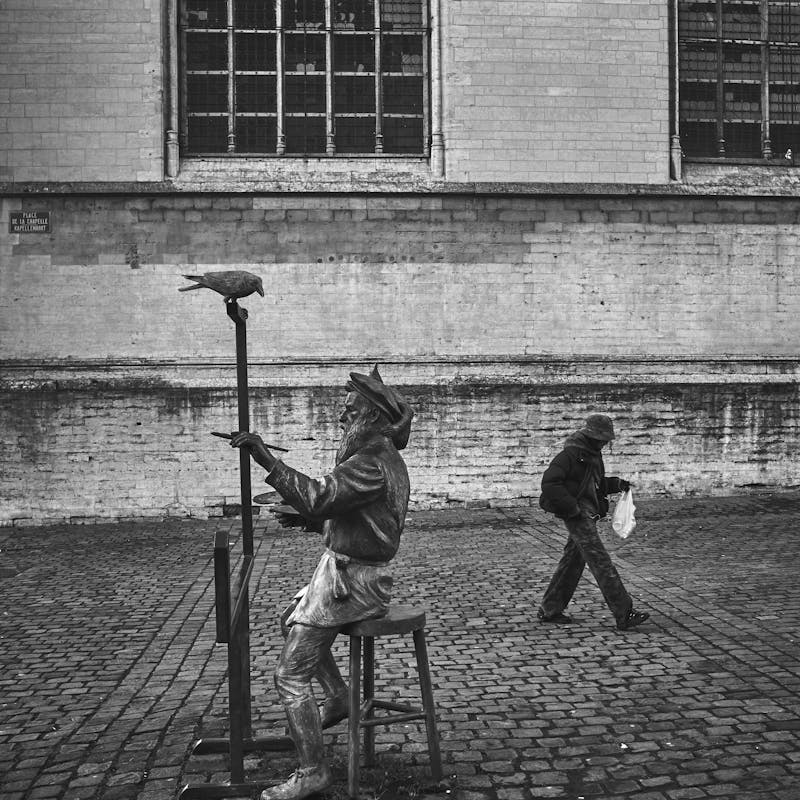
A story told aloud can make a room feel warmer, even before anyone laughs.
Oral tradition—stories, sayings, songs, and family lore passed from voice to voice—still thrives in modern homes that are otherwise saturated with screens. Its appeal isn’t nostalgia for a simpler time so much as a practical, human need: a way to make meaning together, to mark belonging, and to turn ordinary evenings into something shared. In apartments and suburbs alike, spoken storytelling keeps showing up because it does something technology can’t quite replicate.
Why spoken stories still feel different than content
A streamed show arrives finished. A story told at the dinner table is shaped in real time by the listeners.
When someone pauses to remember a detail, the room leans in. When a child interrupts with a question, the teller adjusts. This responsiveness is the point. Oral tradition is less about delivering information and more about negotiating attention—learning how to listen, when to jump in, what counts as funny, what feels tender.
In modern homes, where everyone’s attention is often split, the simple act of telling a story out loud is a small rebellion against fragmentation. It creates a shared tempo. For a few minutes, everyone inhabits the same moment.
The home as a living archive
Families keep records in photos and cloud storage, but the most durable archive is often the one that lives in memory.
Oral tradition is how a household decides what gets carried forward. The “first day at school” story gets told until it becomes a legend. The tale of a grandparent’s first job is repeated, not because the facts are rare, but because the values inside it are.
Over time, these stories become shorthand. A single line—“Remember the moving day”—can summon a whole narrative: the borrowed truck, the broken lamp, the neighbor who showed up with tape. The home builds a private language, and that language becomes a kind of shelter.
Everyday rituals: bedtime, dinner, and the car ride
Oral tradition doesn’t require a formal setting. It thrives in the margins.
Bedtime is an obvious stage: lights low, the day finally quiet. But even there, the enduring appeal often lies in the imperfect stories—ones that drift, repeat, or change endings depending on how tired everyone is.
At dinner, the ritual can be as simple as “Tell your high and low.” That prompt is a modern cousin of older call-and-response practices. It trains people to narrate their day, to take turns, to witness each other without solving or fixing.
And in the car, with no eye contact required, stories come out more easily. Parents describe their own childhoods while watching traffic. Teenagers share a version of their day that might never surface across a table. The moving vehicle becomes a temporary confessional.
How oral tradition teaches without sounding like a lesson
Modern parents worry about lectures. Kids develop radar for moralizing.
Oral tradition slips past that radar because it embeds guidance in narrative. A story about messing up at work and recovering with help carries a message about resilience, humility, and asking for support. But it doesn’t demand agreement in the moment.
Proverbs and family sayings work the same way. They’re small verbal tools—“Measure twice,” “Make it right,” “We don’t leave people behind”—that show up when needed. Over time, the phrases become part of a child’s internal voice, not because they were assigned, but because they were heard in context.
Belonging across generations and changing households
Modern homes are varied: blended families, multigenerational households, co-parenting arrangements, chosen families.
Oral tradition is flexible enough to hold that complexity. A step-parent can earn trust by learning the “origin stories” that matter to a child. A grandparent’s stories can bridge cultural gaps, offering a sense of continuity when a family has moved or when a language is fading.
Even households that don’t share ancestry share narratives. Roommates develop legends about the apartment’s quirks. Couples adopt recurring anecdotes—how they met, the trip where everything went wrong—that act as touchstones during stressful seasons. The point isn’t pedigree; it’s shared memory.
The curious role of technology: threat and amplifier
It’s easy to say screens killed storytelling, but modern technology also gives oral tradition new pathways.
Voice notes can capture a parent singing an old lullaby. Video calls let a faraway grandparent tell the same holiday story year after year. Podcasts have popularized long-form listening again, reminding people what it feels like to sit with a voice.
Still, the most meaningful oral tradition remains local and embodied. A recording is a backup, not the main event. The magic is in the small improvisations: the way someone imitates a relative’s voice, the way the room erupts at the familiar part, the way a story lands differently after a hard week.
Keeping the practice alive without making it precious
Oral tradition survives when it stays ordinary.
That means letting stories be messy. It means allowing a child to retell a tale “wrong” and watching the family accept the new version. It means not correcting every detail, because the emotional truth matters more than the timeline.
It also means inviting more voices. When only one person performs, storytelling can turn into a monologue. When everyone is encouraged—kids included—the home becomes a small community of narrators. Someone learns how to be funny. Someone learns how to be gentle. Someone learns how to hold the room without dominating it.
What remains when the lights go out
A modern home can be full of smart devices and still feel lonely. It can be small and still feel spacious.
Oral tradition offers a kind of low-cost spaciousness: the sense that life is bigger than today’s tasks. When a family tells stories, they’re not just passing time. They’re rehearsing who they are to one another.
Long after a show is forgotten and a phone is replaced, a story can persist—tweaked, trimmed, lovingly exaggerated—until it becomes a home’s quiet inheritance. And maybe that’s the enduring appeal: spoken words can outlive the moment that produced them, yet remain warm enough to gather around.