The future doesn’t always arrive with a hum; sometimes it arrives with crumbs.
The kitchen counter is an unglamorous stage for big ideas. It’s where the day begins in a rush, where a late-night snack gets assembled under fluorescent light, where you set down the mail and promise yourself you’ll sort it later. Yet it’s also where some of the most powerful “future tools” already live—quiet technologies and habits that, taken seriously, can reshape how you eat, think, waste less, spend less, and even how you relate to your own body.
A lot of people imagine the future as something sleek and sealed: a smart home that anticipates your needs, a refrigerator that orders groceries, a countertop robot that performs dinner like theater. Those things may come. But the more interesting story is how many of tomorrow’s abilities—precision, personalization, sustainability, self-knowledge—are already available in objects that look almost boring.
The counter as a command center
Most kitchens are designed for motion rather than mindfulness. You reach, you rinse, you slice, you stack. The counter becomes a runway for tasks.
But seen differently, it’s a command center: a place where inputs become outputs. Raw becomes cooked. Confusion becomes a plan. A few tools on that surface quietly shift you from reactive eating to intentional eating.
That’s the real future hiding in plain sight—less about novelty, more about control. Not control in the strict, joyless sense, but in the comforting sense of knowing what you’re doing and why.
The digital scale: quiet precision with big consequences
A digital kitchen scale looks like a small, flat compromise between gadget and decor. Many people buy one for baking, then forget it exists.
But a scale is a gateway to a more accurate relationship with food. Not as a moral scoreboard, but as a measuring instrument that turns guesswork into clarity.
If you’ve ever tried to recreate a dish from memory—“a handful of rice,” “a splash of oil”—you know how slippery those phrases are. With a scale, you can repeat what worked and adjust what didn’t. You can learn what a serving actually looks like in your own bowls. You can discover, without drama, that the “little drizzle” of olive oil is often not so little.
It’s also a tool for reducing waste. When you weigh pasta before boiling, you stop cooking the amount you cooked in college for a roommate who never existed.
In a world where personalization is sold as an app feature, the scale offers something more honest: feedback.
The blender: not a smoothie machine, a texture engine
Blenders get typecast. Smoothies, protein shakes, maybe a frozen margarita if it’s that kind of weekend.
But the real future function of a blender is texture transformation. It’s one of the most efficient devices for turning “ingredients” into “solutions.”
A handful of wilted herbs becomes sauce. A bag of frozen vegetables becomes soup. Leftover rice becomes batter for savory pancakes. The blender collapses the distance between what you have and what you can make.
That matters because the next era of cooking—driven by rising grocery costs and more climate-aware eating—will reward adaptability. The blender is a tool of improvisation. It doesn’t ask for perfect produce or an ideal pantry. It asks for something salvageable.
If you’ve ever looked into your refrigerator and felt like it contained “nothing,” the blender quietly argues otherwise.
The instant-read thermometer: trust, safety, and better instincts
Cooking confidence often comes down to one question: Is it done?
An instant-read thermometer answers that question with more dignity than poking a chicken breast and hoping it feels right. It’s not just about food safety, though that matters. It’s about freeing you from anxiety.
When you can verify doneness, you stop overcooking out of fear. Chicken stays juicy. Fish stops turning chalky. Pork gets its second chance at a reputation.
This small tool also builds intuition over time. You start to notice how a steak feels at medium-rare, not because you guessed correctly once, but because you confirmed it repeatedly. The thermometer becomes training wheels for judgment.
In the future we’re promised—where sensors and data help us optimize everything—it’s refreshing to realize you can optimize dinner with a device that costs less than a nice cutting board.
The humble jar: fermentation and the return of edible time
A glass jar might be the most underestimated future tool on the counter.
It stores leftovers, sure. But it also enables fermentation, which is a kind of cooking that uses time as an ingredient. Sauerkraut, pickles, yogurt, sourdough starter—these foods are old, but their modern relevance keeps growing.
Fermentation is the opposite of convenience culture, and that’s partly why it feels futuristic. It asks you to plan a few days ahead, to observe small changes, to accept that flavor develops rather than arrives.
It also expands what your groceries can become. A cabbage becomes a condiment that lasts weeks. Slightly sad carrots become pickles that make a plain sandwich feel deliberate.
When people talk about resilient food systems, they often mean high-level things: supply chains, agriculture, distribution. The jar is resilience at human scale. It’s how you keep food edible longer, how you turn abundance into something stable.
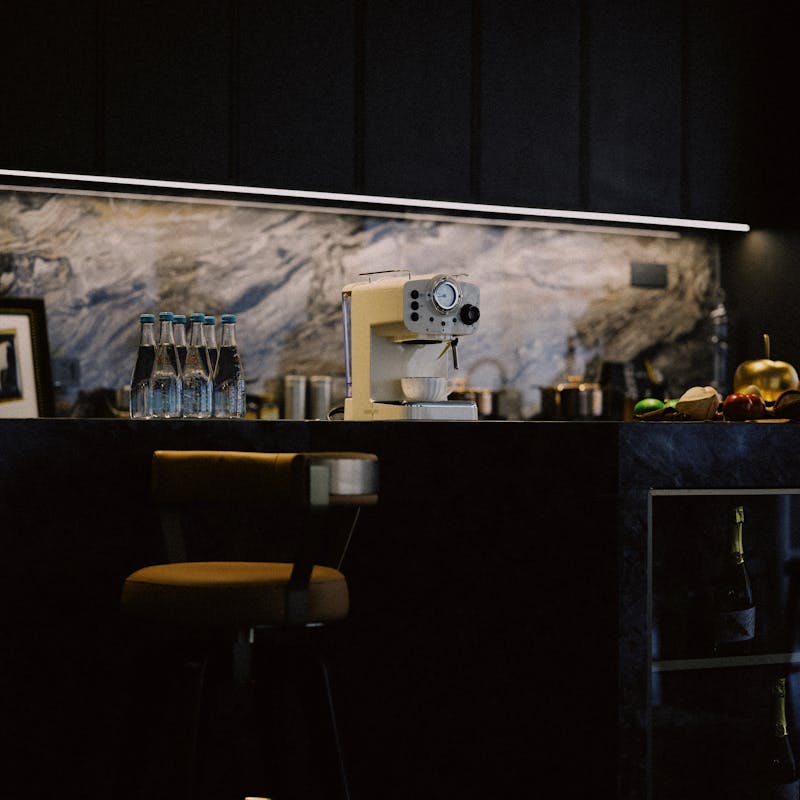
The coffee setup: a daily ritual disguised as a machine
Coffee devices multiply quickly—grinders, kettles, brewers, frothers. They can look like indulgence. Sometimes they are.
But there’s also a quieter future angle: ritual as technology.
Every morning, the coffee setup invites the same question: Do I want speed, or do I want care? A pod machine is a vote for speed. A pour-over is a vote for attention. Neither choice makes you a better person, but the act of choosing is already a form of agency.
Over time, small rituals shape how you experience your own day. The kettle heating is a pause. The grinding is a signal. The first sip is a boundary between sleep and responsibility.
In a world that constantly asks you to optimize your time, a coffee ritual is a subtle refusal. It says: some minutes aren’t for productivity—they’re for presence.
The cutting board: a stage for skill, not just a surface
The cutting board is so familiar it becomes invisible. Yet it’s where competence happens.
A good board, used daily, turns cooking into something less fragile. It’s the difference between avoiding fresh vegetables because they’re “too much work” and slicing them without thinking. It’s the difference between buying pre-cut fruit at a markup and cutting your own.
Skill is a future tool that doesn’t need charging.
And skill tends to grow where friction is low. If your board is too small, too slick, or always buried under clutter, cooking becomes annoying. If it’s accessible and stable, cooking becomes normal.
That shift—making the healthy, economical option the easy option—is exactly the kind of “future” people want, even if they don’t describe it that way.
The phone on the counter: the most powerful tool, and the most distracting
No object on the counter is more potent than the phone.
It can be a recipe book, a timer, a grocery list, a nutrition reference, a budget tracker, a language translator for unfamiliar ingredients. It can teach you how to break down a chicken, how to season a cast-iron pan, how to fix a sauce that broke.
It also pulls you out of the room.
The future of home cooking depends in part on whether the phone functions as an assistant or a saboteur. When it’s open to a recipe, it extends your capabilities. When it’s open to a feed, it fragments your attention until cooking feels like a chore you can’t finish.
A small scene plays out in many kitchens: pasta water boiling, cutting board ready, phone propped against a jar. If the screen shows a recipe, you move with purpose. If it shows messages and headlines, you start forgetting what you were doing.
The tool is the same. The outcome isn’t.
The compost bin: a moral instrument you can actually use
Sustainability often gets marketed as a lifestyle identity, which makes it feel distant and performative.
A compost bin is different. It’s tactile. It’s immediate. It changes what you notice.
When you compost, you see how much you throw away. Onion skins, coffee grounds, lemon peels, the stems you trimmed without thinking. Some of that waste is unavoidable. Some of it is a signal: you bought more than you used, or you didn’t have a plan.
Composting doesn’t fix the climate. But it trains a future-facing muscle: awareness of cycles. Food came from somewhere, and it can go somewhere besides the landfill.
It’s not glamorous, which is exactly why it works.
The real upgrade: seeing tools as choices
What makes these objects “future tools” isn’t that they’re new. It’s that they invite a different relationship with daily life.
The scale offers honesty. The blender offers adaptability. The thermometer offers confidence. The jar offers patience. The coffee setup offers ritual. The cutting board offers skill. The phone offers knowledge. The compost bin offers responsibility.
Together, they form a quiet system that makes you more capable.
And capability is the most underrated luxury.
A counter is a kind of mirror
If you want to know what someone values, look at their counter. Not in a judgmental way, but in a human way.
A crowded counter can mean a busy mind. A bare counter can mean a desire for control. A counter with a scale and a few jars might mean someone is trying to pay attention—to money, to health, to waste, to flavor.
The future isn’t only coming from companies building smarter appliances. It’s also coming from ordinary people reinterpreting what they already own.
Tonight, you might set a cutting board down and realize you’re not just making dinner. You’re practicing a small form of independence.
And that’s the kind of future worth recognizing: the one that’s already within reach, waiting on the counter for your hands.