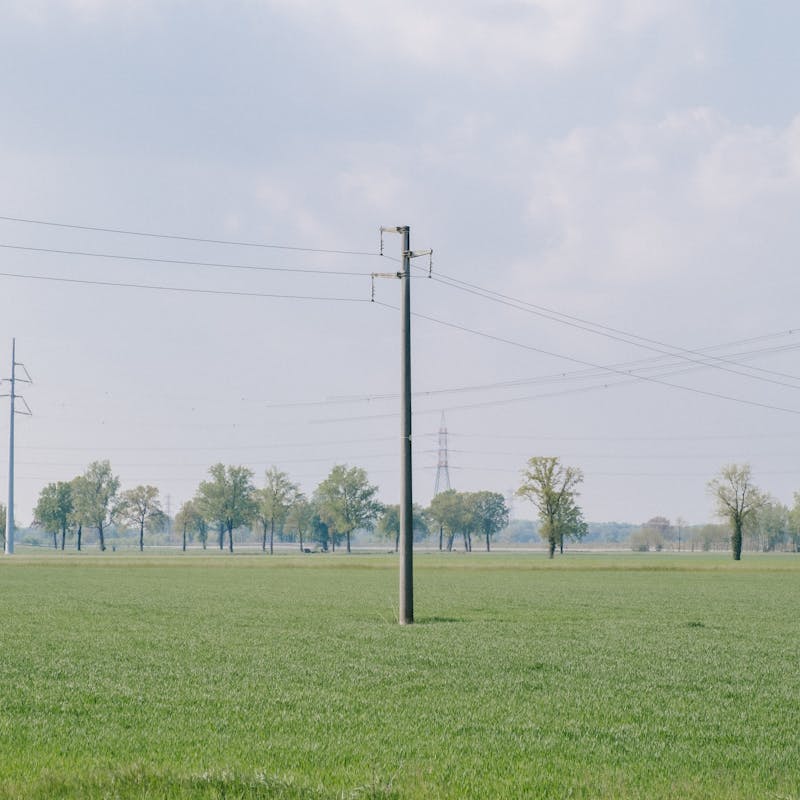
Every breakthrough leaves a footprint—sometimes on the ground, sometimes in the sky.
Discovery has a public face: the photo of a new world, the graph that spikes, the headline that promises a “revolution.” But discovery also has a quieter life, the one that begins after the applause. It moves into factories, farms, shipping lanes, and bedrooms. It reshapes what people expect from comfort and speed, and it quietly rewrites what the planet has to carry.
When we talk about the future of Earth, we tend to separate “nature” from “innovation,” as if one is a landscape and the other is a lab. In practice, they’ve always been braided together. The hidden connections aren’t just about technology causing harm, or technology fixing harm. They’re about how every new way of knowing becomes a new way of living—and how that living either tightens or loosens our relationship with limits.
The moment “new” becomes normal
A discovery is often described as a door opening. What’s less discussed is how quickly people start building hallways.
Consider how many inventions begin as niche: a battery chemistry that works in a controlled setting, a sensor that can detect a faint signal, a technique for mapping something invisible. Then a thousand practical decisions follow. Engineers ask what materials are cheapest. Companies ask what scale is profitable. Consumers ask what’s faster or simpler.
Those questions turn discovery into infrastructure, and infrastructure into habit. Habits are where environmental impact really lives. The biggest shifts in the planet’s future happen when a new normal changes millions of daily choices—how far goods travel, what homes require to stay comfortable, what food looks like at the store, what “affordable” energy means.
Knowledge changes what we value—and what we extract
Some discoveries expand the list of things we consider valuable. That can be wonderful, like recognizing an ecosystem service we once ignored. It can also be perilous.
Finding a way to separate an element efficiently can turn a previously useless rock into a target. Mapping a region in higher resolution can make remote places legible to markets. Even the ability to forecast weather more precisely can steer agriculture and shipping into new patterns.
This isn’t an argument against knowing. It’s a reminder that information isn’t neutral once it enters an economy. The planet’s future hinges on whether new knowledge is paired with new rules of restraint—or whether it simply accelerates extraction with better maps.
The rebound effect nobody puts on a poster
There’s a quiet paradox that haunts many “green” breakthroughs: efficiency can lead to more consumption.
When something becomes cheaper to use—energy, transportation, data storage—people often use more of it. A car that gets better mileage can make longer commutes feel reasonable. LEDs lower electricity use per bulb, but they also encourage brighter, more abundant lighting. Digital services reduce the need for physical media, yet the demand for streaming and cloud computing grows until the total energy use is anything but trivial.
This rebound effect doesn’t mean efficiency is pointless. It means discovery must be paired with cultural and policy choices that keep the savings from being spent immediately on more throughput. Otherwise the planet gets a faster treadmill, not a lighter load.
Discovery as a way to see, not just to build
Not all discoveries are new machines. Some are new ways of noticing.
Climate science is a prime example: a method for reading paleoclimate records, a better model for ocean circulation, a clearer estimate of how heat waves change with warming. These discoveries don’t provide a gadget. They provide a warning, a narrative, a set of probabilities that can guide choices.
The planet’s future depends on whether societies treat that kind of discovery as actionable knowledge or as academic noise. It’s easier to celebrate a new product than to reorganize a city around risk, or to admit that prosperity must look different in a hotter world. Yet the discoveries that help us see consequences are often the ones that matter most.
Materials: the hidden geography of innovation
Behind every clean-sounding technology is a material story. Solar panels, wind turbines, electric vehicles, and data centers all rely on mined resources, chemical processing, and supply chains that stretch across continents.
A discovery that improves battery performance may reduce tailpipe emissions, but it can also increase demand for lithium, nickel, cobalt, graphite, and the energy-intensive steps that make them usable. Even recycling breakthroughs, when they arrive, require their own infrastructure and energy.
The hidden connection here is geographic: the benefits of an innovation often appear in one place, while the environmental costs concentrate elsewhere. The planet’s future will be shaped by whether we make those costs visible and negotiable—through stronger labor standards, smarter mining practices, circular design, and honest accounting of trade-offs.
Time horizons: what discovery teaches us about patience
Many discoveries reward short-term thinking. They enable faster delivery, instant entertainment, immediate convenience. But the environmental consequences operate on longer arcs—decades of accumulated emissions, years of soil degradation, centuries of altered coastlines.
The most useful connection between discovery and the planet’s future might be this: discovery can train a society to think in systems.
Systems thinking doesn’t ask, “Does this work?” It asks, “What happens next?” It asks whether a solution scales without breaking something else, whether it shifts burdens onto people without political power, whether it locks us into infrastructure that will be expensive to abandon.
A culture that prizes discovery but neglects systems is like a household that keeps buying tools without learning how to repair.
The kind of discovery we rarely fund
Some of the most planet-relevant breakthroughs are not glamorous. They involve better building insulation, low-carbon cement, heat pumps tuned for existing housing stock, and grid upgrades that make renewable energy reliable.
They’re discoveries that live in standards, codes, and maintenance. They don’t offer a dramatic unveiling; they offer a quieter miracle: less energy used every day, for decades.
The hidden connection is political, not technical. When incentives favor novelty over durability, we get constant reinvention. When incentives favor reliability and repairability, discovery turns into resilience.
A future shaped by choices after the breakthrough
It’s tempting to imagine discovery as a hero arriving just in time. More often, discovery is a fork in the road.
One path treats knowledge as permission to expand—more speed, more scale, more extraction, more waste with better branding. The other path treats knowledge as responsibility—an opportunity to redesign systems so that comfort and opportunity aren’t tied to endless consumption.
The planet’s future won’t be decided by discovery alone, but by what we do with it when the headlines fade. The real test begins in the ordinary: the procurement policy, the building permit, the product design meeting, the vote. Discovery opens possibilities. Wisdom decides which ones become real.