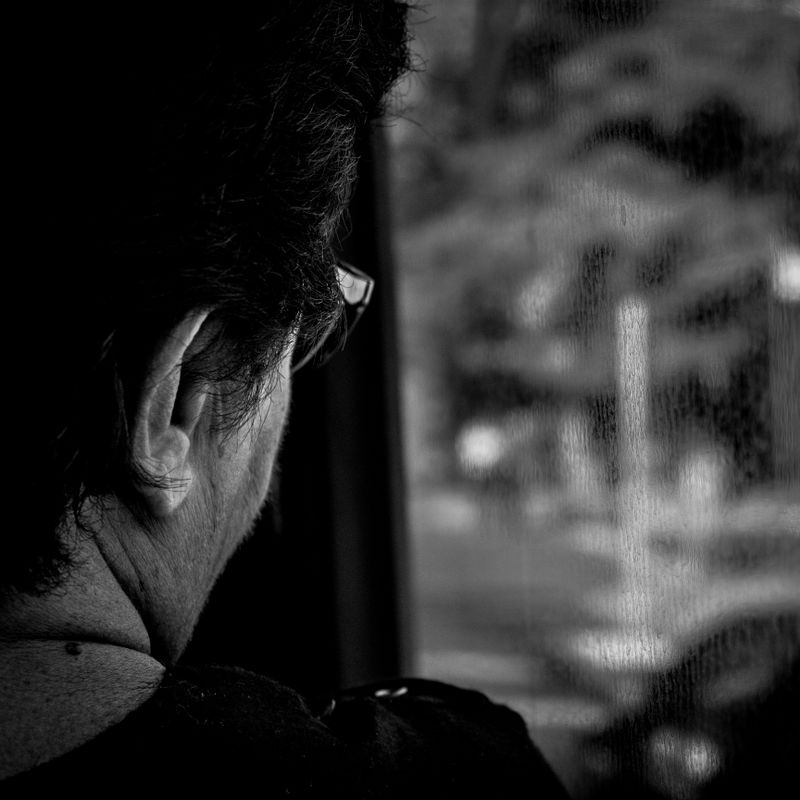
A real detail can open a whole door in the mind.
True story writing prompts aren’t just “ideas”—they’re tools for pulling memory, observation, and emotion into a shape a reader can actually feel. If you’ve ever read a personal essay that lingered for days, chances are it began with a small, true moment that had friction: a choice, a mistake, a misunderstanding, an ordinary scene that suddenly meant more.
What makes these prompts work is less about inventiveness and more about precision. They help you locate the lived moment worth exploring, then give you a way to approach it—gently or head-on—without turning it into a diary entry or a summary of events.
Why “true” prompts often beat “anything goes” prompts
A wide-open prompt (“Write about anything”) can feel generous, but it often leaves writers stranded. A true-life prompt gives you constraints: a time, a place, a relationship, a sensory anchor. Constraints do something quietly powerful—they reduce the number of decisions you need to make before you can write a first honest sentence.
There’s also a psychological edge. Research on expressive writing, especially the work associated with psychologist James Pennebaker, has found that structured writing about lived experiences can support meaning-making and emotional processing. The point isn’t therapy on the page; it’s that the mind tends to produce clearer narratives when it’s asked to look at a real event through a specific lens.
A “true story” frame pushes you away from vague themes (“grief,” “joy,” “identity”) and toward particularity: the fluorescent light in the hallway, the wrong ringtone at the wrong time, the taste of cafeteria coffee when you realized something had changed.
What makes true story writing prompts work?
They work because they create a focused question your memory can answer. Good prompts don’t demand a whole life story; they ask for one scene with pressure in it.
A strong true-life prompt usually includes three elements:
- A boundary (one day, one conversation, one decision)
- A pivot (what changed, cracked, or became clear)
- A point of view (who you were then, and who you are now)
The best ones also imply an audience—not “Dear Diary,” but “Here is something I noticed, and it might matter to you, too.” That subtle shift helps you shape the material into a story rather than a confession.
The hidden engine: specificity + stakes
Specificity isn’t trivia; it’s credibility. A single accurate detail can do more than a paragraph of explanation.
Stakes don’t have to be dramatic. In true stories, “stakes” can mean:
- The risk of being misunderstood
- The cost of telling the truth
- The discomfort of admitting you were wrong
- The ache of realizing you can’t go back
When a prompt nudges you toward both specificity and stakes, it’s doing its job.
The difference between a memory dump and a story
Many writers hesitate with personal material because they don’t want to overshare or spiral into summary. A useful way to think about it: a story is not everything that happened; it’s what the moment meant.
One practical test is to ask, “Where is the turn?” Not the climax in a movie sense, but the point where your understanding shifted—even slightly.
Below is a simple comparison that can help you revise your draft away from “and then, and then” writing.
| Element | Memory dump | Story draft |
|---|---|---|
| Focus | Everything you can recall | One scene that contains the meaning |
| Time | Weeks/years summarized | Minutes/hours rendered in detail |
| Voice | Unfiltered recounting | Selected details shaped for effect |
| Ending | Stops when events stop | Ends when insight lands |
| Reader experience | Observes your life | Recognizes something in their own |
If your draft reads like a timeline, don’t panic. It just means you haven’t picked the container yet: the single scene that holds the charge.
A set of true story writing prompts that reliably produce pages
Some prompts are “cute,” and some are productive. The prompts below are designed to generate scenes—not just ideas. Choose one and commit to writing it as a sequence of moments, with dialogue and sensory detail where possible.
- Write about a time you were certain you were right—and later discovered you weren’t. Start with the sentence you wish you could take back.
- Describe a door you walked through that changed your life. Keep it literal: a hospital door, a classroom, a car door, a front gate.
- Write the story of a small lie that created a big inconvenience. Don’t moralize; stay in the consequences.
- Tell a true story that begins with a sound. A notification, a siren, a laugh from another room.
- Write about a meal you couldn’t finish. What was happening around the table, and what couldn’t be said?
- Describe the moment you realized you were being watched—or finally seen. Keep the scene grounded in body language.
- Write about a rule you broke that still feels justified. Show the rule, then show the reason.
- Tell the story of something you lost and later found, but it wasn’t the same. An object, a friendship, a sense of safety.
- Write about the most ordinary day that later became important. Choose three mundane details and make them carry weight.
- Describe a moment you felt proud and guilty at the same time. Let both feelings coexist.
These are true story writing prompts in the most practical sense: they point your attention toward friction, which is where real narratives tend to begin.
How to use true story writing prompts without getting stuck
A prompt is a spark, but craft is what keeps the fire going. If you often start strong and stall, the problem is rarely “lack of talent.” It’s usually one of three things: too much scope, not enough scene, or fear of what the material implies.
Here’s a short checklist that keeps the writing grounded.
- Pick one scene. If you find yourself summarizing weeks, choose a single day.
- Name the desire. What did you want in that moment—approval, escape, control, peace?
- Track the body. Add two physical sensations (dry mouth, heavy limbs, a hot face). They’re often more truthful than your explanations.
- Use one “telling” line of dialogue. A sentence you still hear clearly, even if you can’t remember everything else.
- End at the change. Stop when you can state what shifted: “After that, I didn’t…,” “From then on, I started…,” “I realized…”
A gentle approach to privacy and ethics
Writing true stories doesn’t mean you owe anyone full exposure. Many memoirists and essayists protect people by:
- Combining characteristics into a composite
- Changing identifying details that don’t affect the emotional truth
- Focusing on their own choices and perceptions rather than diagnosing someone else
Also: if a story involves trauma, it can help to draft with distance—write the scene, then step back and write what you can say now. The World Health Organization and other public health bodies have noted links between social connection, mental health, and stress; writing isn’t a substitute for care, but it can be one meaningful way to process experience without isolating yourself inside it.
Why readers trust true stories (and what they actually want)
People don’t read personal narratives just to learn what happened to someone else. They read to locate themselves—quietly—in another life.
That’s why the most effective true-life pieces do two things at once:
- They honor the facts of the moment (what happened, what was said, what it looked like)
- They translate the moment into human recognition (what it revealed about fear, love, ambition, shame, loyalty)
Notice what this does to your writing choices. You begin selecting details not because they’re impressive, but because they’re legible. A reader may not share your childhood, job, or culture, but they understand the feeling of waiting for a text that doesn’t come, or rehearsing a hard sentence in the mirror, or trying to act normal in a room that has changed.
The craft move that elevates everything: the “double lens”
One of the most reliable techniques in true storytelling is the double lens:
- Then-self: what you believed in the moment
- Now-self: what you understand looking back
A prompt that invites the double lens naturally creates depth. It gives your story a second dimension—time—which is often where insight lives.
If you’re worried about sounding preachy, keep the now-self modest. Instead of delivering a lesson, offer a sharper observation. Instead of “I learned you should always…,” try “I didn’t know how much I was trying to…,” or “I see now that I was protecting…”
When a prompt doesn’t “work,” it’s often the wrong angle
Sometimes you choose a prompt and nothing comes. That doesn’t mean you’re blocked; it may mean the prompt is asking your memory the wrong question.
Try rotating the angle:
- If you’re stuck in explanation, ask: What did the room look like?
- If you’re stuck in scene, ask: What did I want?
- If you’re stuck in shame, ask: What would I defend about my younger self?
- If you’re stuck in anger, ask: What was I afraid of losing?
This is also where “minor” stories become major. A prompt about a missed bus can become a story about class, exhaustion, or a relationship dynamic—if you find the angle that holds the tension.
A quiet standard to aim for
The goal isn’t to prove your life was unusual. The goal is to render a moment so clearly that it becomes shareable—portable—without losing its truth.
If you’re choosing between two true story writing prompts, pick the one that makes you slightly nervous for a craft reason, not a performance reason. Not “Will people be impressed?” but “Can I write this scene honestly without smoothing it out?”
Because that’s the real magic: when you stop trying to make the story big, and instead make it exact. And once a moment is exact, it has a way of growing on the page—into meaning, into voice, into something that feels, to a reader, like their own memory flickering for a second in someone else’s light.