A screen goes dark, and suddenly you can hear yourself think.
It’s strange how revealing silence can be.
Most of the day, our devices don’t feel like mirrors. They feel like tools—useful, neutral, almost invisible in the way a steering wheel becomes invisible once you’re driving. We check messages, scroll headlines, queue music, send an email with a typo, look up a restaurant, take a photo, delete it, take another. The day keeps moving.
But there are quieter moments—small pauses, often unplanned—when our devices stop being tools and start becoming something else. A reflection. A record. A set of choices we didn’t know we were making.
These moments aren’t dramatic. They happen while waiting in a parked car, standing in a grocery line, sitting on the edge of a bed before sleep. They happen when the TV is off and the room is still, and the phone is the brightest thing in it.
In those seconds, our devices reveal who we are, not through what they can do, but through what we reach for.
The instinct to fill empty space
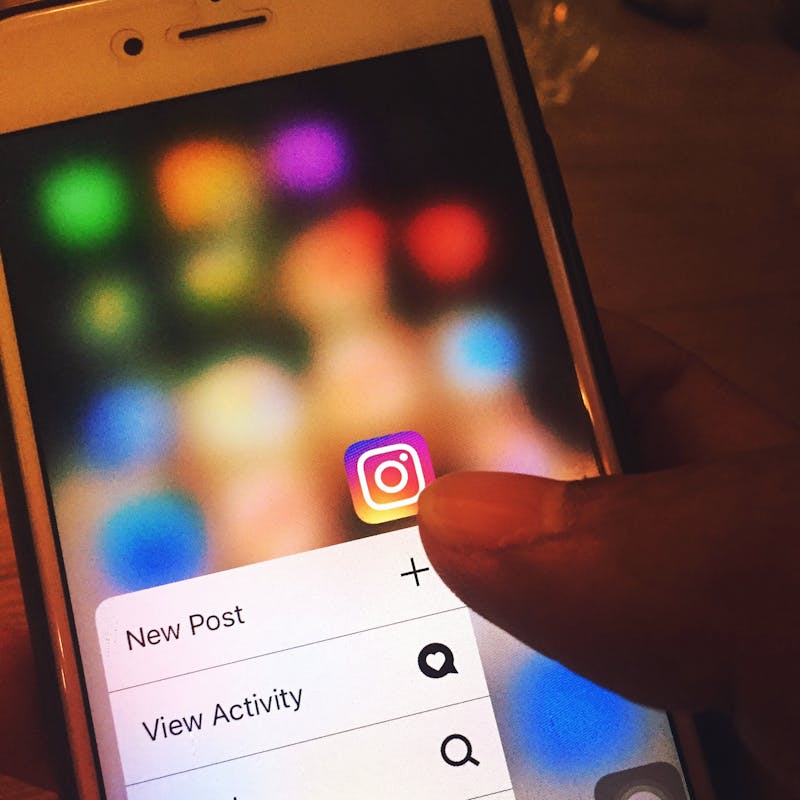
A quiet moment arrives, and the hand moves before the mind catches up.
You’re waiting for water to boil. You’ve got thirty seconds. Your phone is already in your palm, unlocked, thumb poised. It’s not that you need anything. It’s that the absence of input feels unfinished, like a sentence missing its period.
What shows up on the screen in those moments is rarely random. We don’t open just any app; we open our app. The one that best matches our mood, our needs, and our habits—sometimes our anxieties.
Some people reach for news, not because they love it, but because uncertainty feels safer when it’s named. Some reach for social feeds because seeing other lives provides a quick sense of orientation. Some reach for games because structure feels comforting. Some reach for shopping because desire can be easier to manage than discomfort.
It’s tempting to frame this as self-control versus distraction, but that’s too simple. The deeper question is why the mind treats emptiness as a problem to solve.
The quiet moments reveal our relationship with silence: whether we trust it, fear it, or treat it like dead air.
The shape of your attention
Devices don’t just respond to us; they train us.
The more we tap through short bursts of content, the more our attention starts to prefer the short burst. We become people who want an answer quickly, who get impatient with anything that takes time to unfold—books, conversations, even our own thoughts.
Then a quieter moment appears, and we notice something subtle: we struggle to stay with one thing.
The phone is open, but the mind is restless. A video plays while messages are checked. A headline is skimmed while a playlist is changed. Nothing lands.
That is a kind of self-portrait.
Not a moral failure, but a map of what our days have been teaching us to expect. When a device reveals who we are, it often reveals what our attention has become—a little fragmented, a little hurried, hungry for novelty, sometimes afraid of depth because depth demands patience.
And yet, the same device can also show the opposite. Some people open a reading app and disappear into a long essay. Some press play on a language lesson. Some take a photo of the light on the wall because they’re paying attention.
The quiet moments show the direction our attention tends to lean when no one is watching.
The private archive we carry
Every device is a diary we didn’t mean to keep.
Not a diary in the handwritten sense, where you choose what to record, but a diary made of searches, photos, half-written notes, calendar reminders, saved posts, and location dots. A diary made of patterns.
You might forget what you felt last Tuesday. Your camera roll doesn’t.
There’s a certain intimacy in scrolling back and finding evidence of your life: meals photographed with enthusiasm and then abruptly abandoned; a cluster of blurry pet pictures; screenshots of poems; dozens of images of the same sunset from slightly different angles.
The archive is revealing because it isn’t curated for an audience—not entirely. It includes the accidental, the repetitive, the unremarkable.
And in those quiet moments, when you’re alone with your device and you stumble into that archive, you’re also alone with your own continuity. You see what you return to. You see what you try to hold onto.
Some people keep their lives in photos. Others keep them in messages. Others keep them in notes—lists of books they’ll never read, ideas for projects they’ll never start, fragments of self-improvement that reflect a persistent hope.
Even if we never call it identity, we store the evidence of it.
What we seek when we’re tired
A device late at night tells the truth faster than a conversation does.
During the day, we’re often performing—competence at work, politeness in public, humor with friends, steadiness with family. Then night comes, and the performance loosens.
The phone glows. The room is quiet. The body is tired.
What we reach for then can be tender, and it can be unsettling. Comfort videos. Old songs. Familiar faces. Long threads of other people’s opinions that leave us agitated. Searches we’d never say out loud, not because they’re shameful, but because they’re raw.
In those late quiet moments, devices reveal our unfiltered needs: reassurance, escape, stimulation, connection, numbness, answers.
They also reveal our thresholds. How quickly we tip from curiosity into doom-scrolling. How long we can sit with a hard feeling before we outsource it to a screen.
If you want to understand what a person is carrying, watch what they do when they’re exhausted and alone. The device is often where the truth goes first.
The stories we tell ourselves with algorithms
It’s easy to forget that our devices don’t simply show us the world; they show us a version of it.
Over time, the content we click becomes the content we’re offered, and the offered content becomes the content we come to expect. It can feel like the internet is confirming our thoughts, validating our fears, supporting our preferences.
A quiet moment arrives and we open an app, and within seconds we’re inside a curated stream that gently insists: This is what matters. This is what people are like. This is what you should want.
The revelation isn’t only about our choices. It’s about the loop we’re in.
Someone who keeps getting served outrage might start to feel that the world is mostly malicious. Someone who keeps getting served perfection might start to feel that they’re behind. Someone who keeps getting served quick jokes might start to feel allergic to seriousness.
The device reveals who we are, but it also reveals who we’re being shaped into.
That’s not a call to panic. It’s an invitation to notice.
The small courage of putting the phone down
There’s a particular kind of quiet that happens when you set your device aside and don’t immediately replace it with something else.
At first, it can feel like boredom. Then it can feel like restlessness. Then—sometimes—it turns into something more interesting: the mind making its own weather.
You remember an awkward conversation from earlier and realize what you actually meant. You feel a sadness you’ve been skimming past. You get a tiny spark of excitement about a project you’d forgotten you wanted.
None of that is available when every quiet moment is immediately filled.
The choice to put the phone down isn’t just about discipline. It’s about making room for your own interior life to speak.
And when it does, it often says things that aren’t optimized for engagement. They don’t arrive in five-second clips. They arrive slowly, in the language of memory, longing, and thought.
This is one of the most personal ways devices reveal who we are: by showing us how quickly we rush away from ourselves—and what happens when we don’t.
When connection is real, and when it’s a substitute
The quietest moments can also be the most social.
A person sits alone and sends a voice message. Someone checks in on a friend across time zones. A family group chat flickers with small updates that add up to a sense of belonging.
There’s a warmth in that.
But there’s also a thinner version of connection—an endless grazing on other people’s lives that leaves us feeling oddly empty. Not because the content is bad, but because it requires nothing of us except attention.
A quiet moment makes this difference easier to feel.
After certain interactions, we feel more grounded. After others, we feel more scattered. Devices reveal who we are by revealing which kind of connection we’re actually building—and which kind we’re using as a substitute for closeness.
It’s not always obvious. Sometimes the substitute is the only thing available. Sometimes it’s a bridge. Sometimes it’s a habit.
But the quiet moment is honest. It tells us whether we’re reaching toward someone or simply reaching away from ourselves.
The person you practice being
Identity isn’t just what we claim. It’s what we rehearse.
Devices are rehearsal spaces.
We practice reacting quickly. We practice comparing. We practice sharing fragments of our lives. We practice holding conversations at a distance. We practice absorbing a thousand small messages about what’s admirable, what’s shameful, what’s normal.
And then, in a quiet moment, the screen reflects back the accumulated result.
Not as a verdict, but as a question.
Are you the person who reads deeply or skims endlessly? The person who checks on friends or checks metrics? The person who documents everything or lets moments pass unrecorded? The person who reaches for calm or reaches for noise?
The answer shifts day to day, which is part of the point. The revelation isn’t fixed. It’s ongoing.
A quieter ending to the day
Sometimes the most revealing moment is the last one.
The phone is in your hand, and you can choose—almost casually—what kind of mind you’ll fall asleep with. A mind full of arguments. A mind full of envy. A mind full of gentle music. A mind full of unfinished work.
Or you can choose the dark screen.
Not as a grand gesture, but as a small vote for quiet.
If our devices reveal who we are, it’s because they sit at the threshold between impulse and intention. They are where we go when we have a spare minute, a restless thought, a lonely feeling, a flicker of curiosity.
And in those small, quiet moments—when no one is impressed, when nothing is posted, when the room is still—we meet ourselves in the simplest possible way.
We see what we reach for.
We see what we avoid.
And if we pay attention, we might start reaching a little differently tomorrow.