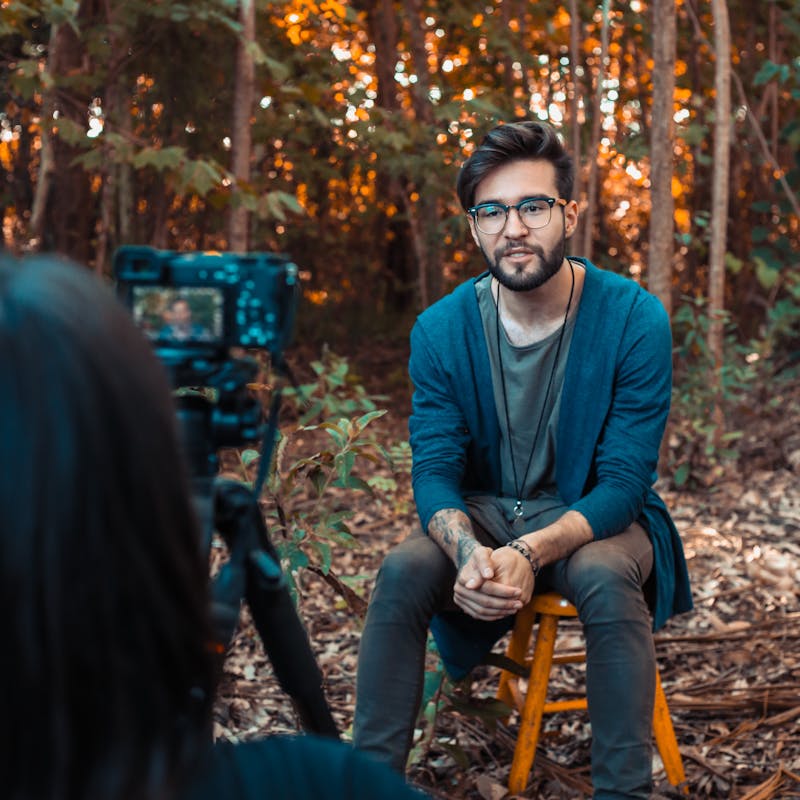
Calm is a skill—and you can practice it before the camera turns on.
Remote interviews reward the same things in-person interviews do—clear thinking, genuine connection, and confident storytelling—but they add a new layer: you have to communicate all of that through a screen. The best remote interview tips aren’t about acting perfect; they’re about reducing friction so your real strengths show up reliably. That means preparing your space, your voice, and your answers in a way that makes “calm and prepared” feel like your default.
Why remote interviews feel harder than they should
A video call compresses a lot of human signals. Slight delays interrupt rhythm, faces become thumbnails, and it’s harder to read the room. Even small technical hiccups can make you second-guess yourself, which can spiral into rushing, filler words, or a flat tone.
The goal isn’t to eliminate nerves. It’s to build conditions where nerves don’t drive the conversation. When the setup is stable and your key stories are ready, your brain has more capacity for listening and responding.
Remote interview tips: build a setup that quietly supports you
A calm presence starts before you say a word. If you’re worried about your Wi‑Fi, lighting, or background noise, part of your attention will stay stuck there.
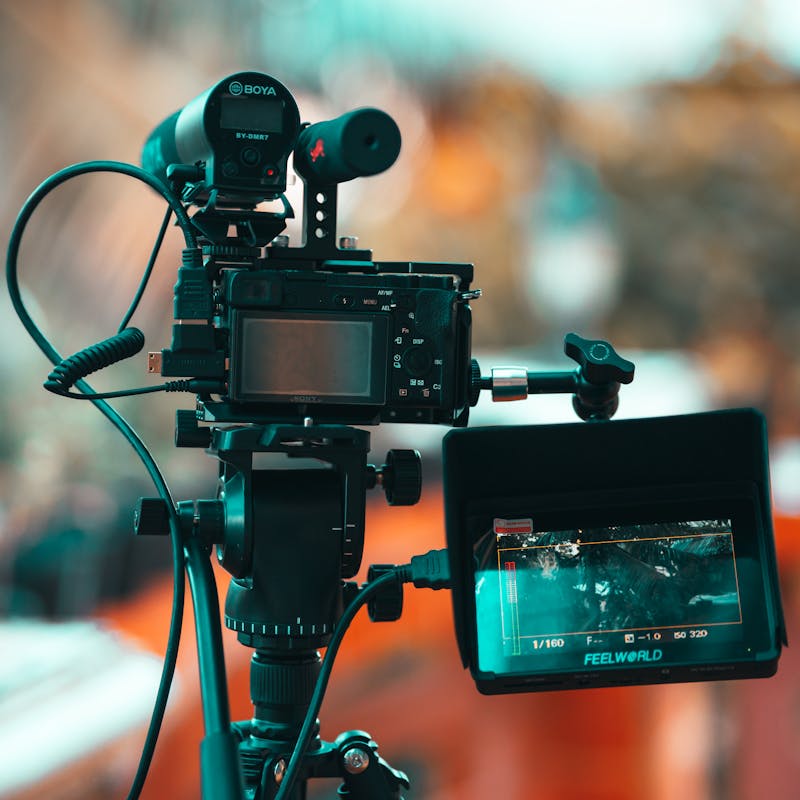
Choose a spot where you can control sound and interruptions. Face a window or lamp so your face is evenly lit—overhead lighting alone can make you look tired on camera. Place the camera at eye level; stacking a laptop on a couple of books often fixes the “looking down” angle that can unintentionally read as disengaged.
Audio matters more than video. If you can, use wired earbuds or a simple external mic. Do a quick test call and listen for hums, echo, or street noise. Then close the loop: silence notifications, put your phone in another room, and keep a glass of water within reach.
What makes you sound calm on video?
You sound calm when your pace is deliberate, your sentences land cleanly, and your breathing stays steady. The fastest way to get there is to speak slightly slower than feels natural and to pause one beat longer after a question.
A practical technique: before answering, inhale gently through your nose and exhale as you begin your first sentence. It prevents you from starting on a shallow breath, which is where vocal tightness and rushed delivery come from.
Also, look at the camera when you deliver your main point. It’s the closest equivalent to eye contact. If you glance down at notes, return to the camera for the “headline” of your answer so your confidence reads visually.
Prepare stories, not scripts
Over-rehearsed answers sound stiff on video. Instead, build a small library of stories you can adapt. Think of them as “modules” that fit different questions.
Pick three to five moments that show range—solving a problem, improving a process, dealing with conflict, learning quickly, or leading without authority. For each story, capture:
- The situation in one sentence
- The stakes (why it mattered)
- Your specific actions
- The outcome (ideally with a metric or concrete result)
- The lesson you’d repeat next time
Write these as bullets, not paragraphs. Bullets keep you flexible and conversational while ensuring you don’t lose the plot when adrenaline hits.
Is it okay to use notes in a remote interview?
Yes—if they’re minimal and don’t pull your eyes away for long. A few well-placed prompts can make you clearer, not less authentic.
Use a one-page “cheat sheet” with role-specific keywords, two or three questions to ask, and your story modules. Keep it next to your camera, not on a second monitor that forces you to look sideways. The rule of thumb: glance, don’t read.
If you need a moment to think, say so calmly: “That’s a great question—let me think for a second.” On video, that tiny bit of narration reads as maturity, not weakness.
Make the first two minutes feel easy
Most interviews are decided emotionally before they’re decided logically. The opening minutes set the tone: Are you clear? Present? Easy to follow?
Prepare a short, warm opener you can deliver without effort: a greeting, a quick thank-you for the time, and a light acknowledgment of the moment (“Hope your week’s going well”). Then transition into your “Tell me about yourself” answer with a structure that’s easy to track: present role, relevant strengths, and what you’re looking for next.
When you can start smoothly, your nervous system gets proof that you’re okay—and you stay steadier for the harder questions.
Answer the questions behind the questions
Many remote interviews include behavioral questions, but the interviewer is listening for deeper signals: judgment, collaboration, ownership, and how you handle uncertainty.
When asked about a mistake, don’t obsess over the error. Emphasize recovery: what you noticed, what you did, and what changed afterward. When asked about strengths, anchor them in outcomes: “I’m strong at simplifying messy projects,” followed by an example that shows it.
These kinds of remote interview tips are less about clever phrasing and more about being easy to trust.
The follow-up that keeps working after the call ends
End with questions that show you understand the role beyond the job description. Ask what success looks like at 30, 60, and 90 days. Ask how the team makes decisions or handles feedback. Ask what challenges the role will inherit.
Afterward, send a brief thank-you message that mirrors the conversation: one specific point you appreciated, one reason you’re a fit, and one small forward-looking note. That specificity is memorable—and it reinforces your calm professionalism.
A quieter kind of confidence
The screen can make interviews feel performative, like you’re competing with your own reflection. But calm doesn’t come from trying to look calm. It comes from preparation that frees your attention for the human part: listening, connecting, and thinking clearly.
The best remote interview tips don’t turn you into a different person. They remove the obstacles that keep the best version of you from showing up on time.