Every lit window is a small promise that someone is still awake.
Night changes the scale of things.
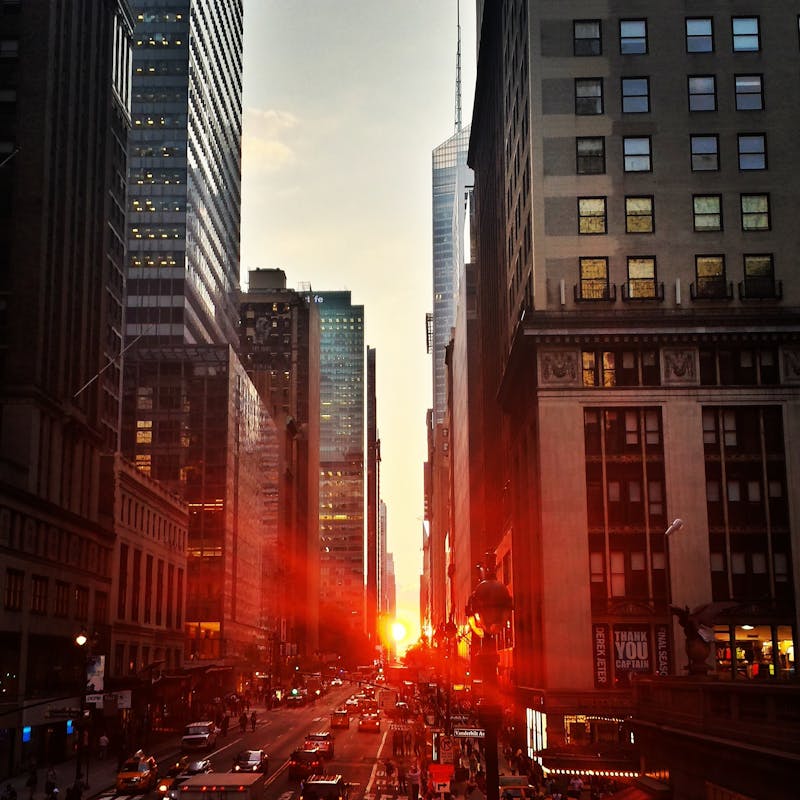
In daylight, buildings assert themselves with brick and glass, with signage and angles. After sundown, the city becomes a darker mass and the details withdraw. What remains are the illuminated rectangles—kitchen windows, bedroom panes, a stairwell’s harsh fluorescents—each one a frame holding a private world.
You can walk down a residential street at 10 p.m. and feel as if you’re moving through a gallery of lives you’ll never enter. A lamp tilted over a book. A television’s blue flicker against a wall. Someone passing by in silhouette, momentarily reduced to a shape and a pace.
We pretend not to look, but we notice.
The soft theater of looking
A glowing window is an invitation and a boundary at the same time.
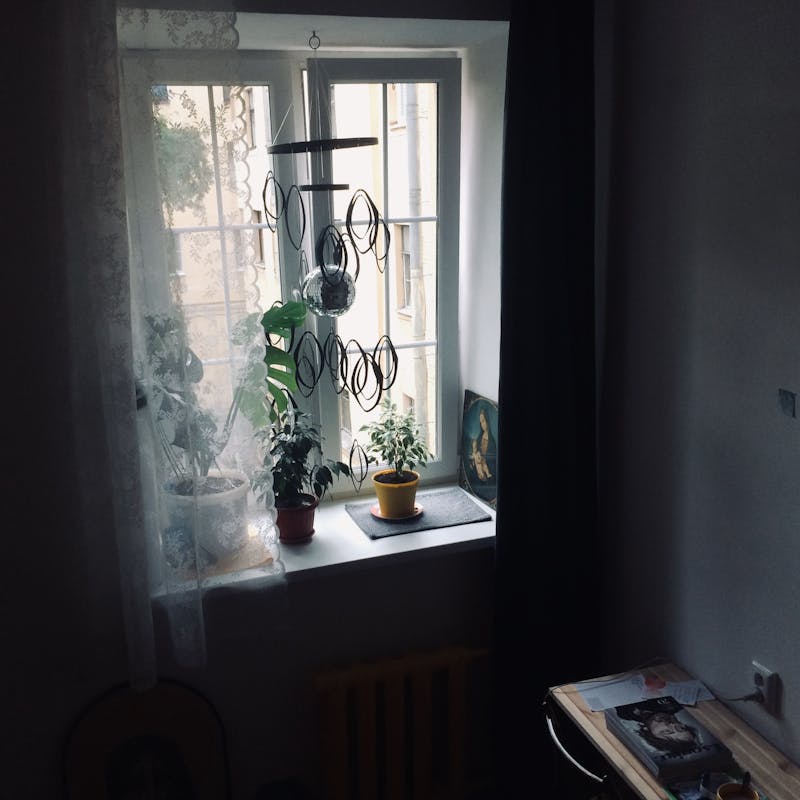
It’s the closest you can get to another person’s interior life without speaking. And it’s also a reminder of what you can’t know. You’re left with fragments: a plant reaching toward light, a stack of dishes, a child’s drawing taped to a glass pane.
The act of looking—quickly, discreetly—sits in a morally ambiguous space. It’s curiosity, yes, but also something more tender: a need to confirm that others exist in the same moment you do.
When you’re walking alone at night, the city can feel indifferent. Glowing windows puncture that indifference. They say, wordlessly, that a woman is rinsing rice for tomorrow’s lunch; that someone is folding laundry with a kind of resigned patience; that a couple is arguing with the low intensity of people trying not to wake their kids.
You don’t hear any of it. You infer. That’s the strange intimacy.
Light as a measure of time
Window light also marks time in a way clocks never manage.
A bright kitchen at 6:30 p.m. suggests routine: dinner, homework, small negotiations about bedtime. The same kitchen at 1 a.m. suggests something else entirely: insomnia, shift work, anxiety that can’t be solved by turning over the pillow.
There are cities where the lights turn off early, and cities where they don’t.
In some neighborhoods, the glow fades by 9:30, as if the whole block agreed to shut down together. In others, the night hums with activity—the late-returning train riders, the delivery scooters, the bartenders finishing their shift and eating cereal at midnight because that’s what’s available.
Glowing windows are a kind of communal calendar, more honest than social media and more subtle than street noise.
The lives we imagine, and the lives that are
The window gives you a story prompt.
A person seated alone at a table could be lonely, or simply content with their quiet. A TV on in the background could mean distraction or comfort. A baby’s nightlight might signal exhaustion and devotion, or the particular kind of worry that comes with listening for every sound.
We fill in the blanks with ourselves.
If you’re in a season of wanting, you might imagine romance where there’s only proximity. If you’re in a season of grief, you might see the emptiness first—the single chair, the untouched place setting, the dim lamp left on out of habit.
The truth is that the same scene can hold multiple realities.
A couple cooking together can be affectionate or simply efficient. Someone pacing can be stressed or rehearsing what they need to say tomorrow. A person working at a laptop at midnight can be ambitious, trapped, or both.
The window offers no captions.
That’s why it’s so powerful. It refuses to resolve into certainty.
Night work and the invisible economy
Some lights stay on because someone has to keep the world running.
You can see it in apartment towers where a few windows remain bright long after most have gone dark. In one, a nurse might be packing a bag for a dawn shift. In another, a line cook could be peeling off grease-stained clothes, too tired to sleep right away. In a third, a security guard may be doing paperwork at a folding table, the only surface that fits in a cramped room.
There’s an entire economy that operates at night—maintenance crews, emergency dispatchers, bakers, transit operators. Their lives don’t always match the nine-to-five rhythm that culture treats as “normal.”
A lit window at 3 a.m. can be a sign of resilience.
It can also be a sign of necessity.
People talk about hustle in abstract terms, but the night reveals it in human scale: one person, one lamp, one small table, one body pushing through hours that are meant for rest.
Loneliness, chosen and unchosen
In the evening, loneliness wears different outfits.
Sometimes it looks like a person at a window, phone in hand, not calling anyone. Sometimes it looks like a bowl of soup eaten standing up because sitting down makes the silence louder. Sometimes it looks like someone laughing at a show, alone, and not needing anyone else to validate the laugh.
It’s easy to romanticize solitude.
It’s also easy to pathologize it.
The truth is more nuanced. Some people are alone because they prefer it, because it brings them back to themselves. Some people are alone because their lives have narrowed through circumstances: divorce, relocation, illness, caregiving, money.
When you see a solitary figure in a bright window, you don’t know which kind it is.
But you recognize the shape of it.
Because nearly everyone has lived inside that shape at least once.
Domestic rituals as quiet infrastructure
What’s striking about glowing windows is how often they reveal routine rather than drama.
A person watering plants. Someone wiping down a counter. A teenager leaning over a desk, the posture of concentration that makes a whole body look like a question mark.
These small acts can seem insignificant until you consider how much of life is built from them.
We tend to celebrate milestones—promotions, weddings, moves—while ignoring the daily maintenance that makes those milestones possible. But the windows at night show the truth: life is mostly upkeep.
And there’s dignity in that.
A home is sustained by countless tiny decisions: to wash the mug now, to set out clothes for tomorrow, to take out the trash even though it’s cold. These gestures are often invisible to anyone outside the household.
Yet they’re the scaffolding of stability.
A glowing window is sometimes just the light of someone keeping their life from falling apart.
The city as a shared shelter
From a distance, an apartment building at night looks like a grid of stories.
Some squares are dark, some bright, some pulsing with TV light like slow lightning. The building becomes a kind of collective organism: hundreds of private lives stacked and adjacent, separated by walls thin enough for laughter to leak through.
There’s comfort in that adjacency.
Even if you don’t know your neighbors, you sense them. You hear their footsteps overhead. You smell their cooking in the hallway. You notice when the familiar light across the courtyard doesn’t come on for several nights, and a small worry forms before you can name it.
Cities can be isolating, but they also make a particular kind of togetherness possible.
Not the togetherness of intimate relationships, but the togetherness of coexisting—sharing weather, sharing infrastructure, sharing the unspoken agreement to keep moving without colliding.
Glowing windows are evidence of that agreement.
They are the visible proof that your own life is not the only one passing through these hours.
What windows don’t show
For all their suggestiveness, windows are curated.
People don’t mean to curate them, not in the way they curate a social profile, but the effect is similar. You see what faces outward: the tidy lamp, the neatly hung curtains, the dining table centered beneath a pendant light.
You don’t see what’s behind the closed door.
You don’t see the unpaid bill tucked into a drawer. You don’t see the text message that ruined someone’s evening. You don’t see the quiet panic that settles after a long day of pretending to be fine.
You also don’t see the tenderness that doesn’t announce itself.
The apology offered in a whisper. The hand placed on a shoulder. The decision to try again tomorrow.
A glowing window is a slice, not the whole.
Remembering that can be a form of mercy—toward others and toward yourself.
The ethics of distance
There’s a reason people lower their gaze when they realize they’ve been staring.
We understand, instinctively, that privacy is not just a legal concept but a kind of spiritual necessity. People need spaces where they can be unobserved, where they can become messy and ordinary without an audience.
And yet, distance has its own ethics.
From the sidewalk, you can’t intervene in someone’s night. You can’t fix their worries or share their joy. You can only witness the fact of them.
That kind of witnessing, when it stays respectful, can make you gentler.
It can remind you that the person who cut you off in traffic might be rushing to a late shift. That the neighbor who didn’t say hello might be navigating something heavy. That the stranger on the train might be going home to a room where the only light comes from a lamp they keep on because darkness feels too final.
Distance doesn’t excuse harm.
But it can soften the urge to assume the worst.
A small scene in a passing glance
There’s a particular kind of moment that happens in winter.
You’re walking, collar turned up, hands in your pockets. Your breath is visible. The street is quiet in the way it gets only when cold discourages lingering. Then you pass a window where a family is gathered around a table, steam rising from bowls.
For a second, the warmth inside feels almost touchable.
You might not envy their exact life, but you register the human shape of it: people sharing space, sharing food, sharing time.
Then you keep walking.
The moment is gone, but it stays with you like a small coal of recognition.
That’s what glowing windows do. They give you brief contact with the fact that life is happening everywhere, all at once—mundane and monumental, broken and mending.
The ending the night refuses to provide
Night doesn’t wrap things up neatly.
It doesn’t tell you which of those windows holds a person about to make a difficult decision, or which holds someone who has finally found peace. It doesn’t reveal whose light is on because they can’t sleep, and whose is on because they’re waiting for someone to come home.
The windows glow, and then they don’t.
That’s the only narrative arc you can be sure of.
And maybe that’s why they linger in the mind. They offer a simple image that can hold complex truth: every life is both visible and hidden, both ordinary and unrepeatable.
When you look up at those rectangles of light, you’re not just seeing other people.
You’re seeing how close we all are to one another—and how much remains unknowable, even at a distance of a few feet and a single pane of glass.