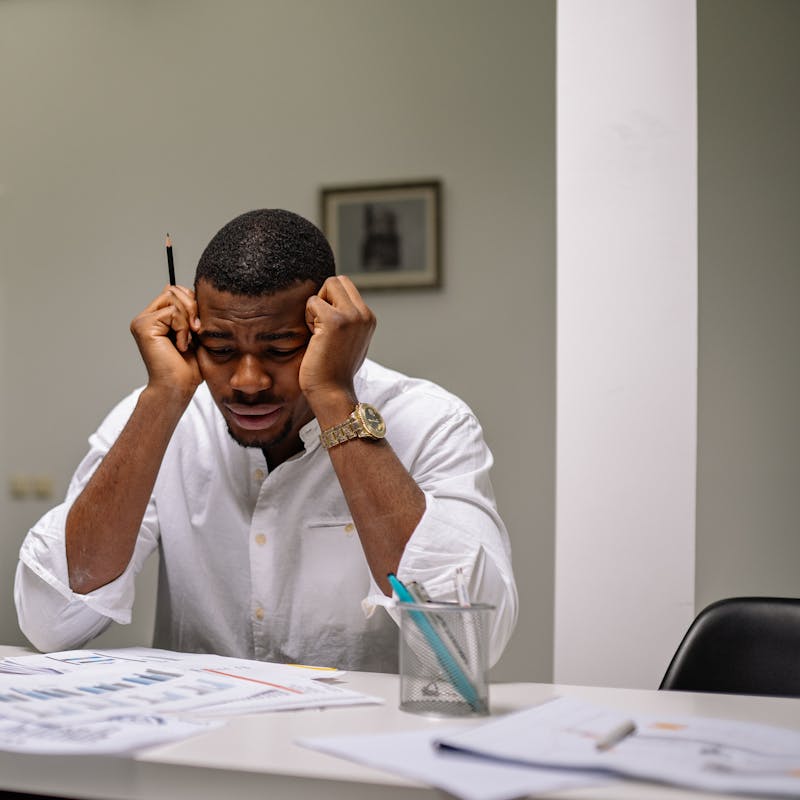
A restless mind doesn’t need louder answers—it needs a quieter place to land.
Anxiety has a way of turning ordinary moments into urgent ones: a quick email feels like a test, a grocery line feels like a trap, and nighttime becomes a replay theater. Mindfulness for anxiety isn’t about forcing calm or “thinking positive.” It’s a set of small, grounded practices that help you notice what’s happening inside you—sensations, thoughts, urges—without being dragged around by them. The goal is not to erase fear, but to relate to it differently, especially when your mind is sprinting ahead.
What follows are quiet, practical approaches that fit real life: a workday that won’t pause, a family that needs you, a nervous system that’s doing its best. Think of them as ways to make space—just enough space—to choose your next move.
Why mindfulness for anxiety works when logic doesn’t
Mindfulness helps because anxiety isn’t only a “thought problem.” It’s also a body state: shallow breathing, tight jaw, restless legs, a stomach that seems to predict disaster. When you try to out-argue that state with logic, your nervous system often stays unconvinced.
Mindfulness shifts the task from winning a debate to observing a weather pattern. You practice noticing, “My chest is tight,” or “My mind is predicting,” and that naming creates a little distance. Over time, that distance can lower reactivity and interrupt the loop where bodily tension fuels catastrophic thinking, which then fuels more tension.
What does mindfulness for anxiety actually look like day to day?
It looks like paying attention on purpose, in small doses, with less judgment than usual. It’s not only sitting cross-legged for 30 minutes. For most anxious minds, consistency beats intensity.
In practice, it can be as simple as feeling your feet inside your shoes while you’re waiting for a meeting to start, or noticing three sounds in the room when you feel a surge of dread. These moments teach your attention to return to the present—where life is usually more manageable than the future your mind is rehearsing.
The “anchor” practice: returning without wrestling
Anxiety loves to recruit attention. The more you fight it, the more it insists. Anchoring is a gentler move: you choose one neutral sensation to return to, again and again, like touching base.
Try this for one minute:
Breathe normally and pick an anchor—air moving at the nostrils, the rise of the belly, or the pressure of your feet on the floor. When thoughts flare (“What if I mess up?”), silently note “thinking” and return to the anchor. If you return 50 times in a minute, you’re doing it right.
This isn’t a performance. It’s reps for attention.
A quiet body scan for when anxiety feels physical
Some anxious episodes don’t start with thoughts; they start with sensation. A body scan can help you detect the earliest signs before they become a full wave.
Start at the forehead and move downward: brow, jaw, throat, shoulders, chest, belly, hands, legs, feet. At each spot, ask, “What’s here?” not “How do I fix this?” If you find tightness, try softening around it by 5%, as if you’re loosening a knot without yanking it.
Even two minutes can shift your relationship to symptoms. You’re no longer inside the sensation—you’re with it.
Working with anxious thoughts: labeling and defusion
Anxiety often speaks in headlines: “This will go badly.” “Everyone will notice.” Mindfulness doesn’t demand you disagree. It invites you to see the thought as a mental event, not a prophecy.
Two helpful labels:
- “Planning” (when your mind tries to control the future)
- “Predicting” (when your mind insists it knows what will happen)
You can also add a gentle phrase: “I’m having the thought that…” This small grammatical change can reduce fusion—the feeling that your thoughts are identical to reality.
The point isn’t to stop thoughts. It’s to stop being owned by them.
Micro-practices for public places and busy days
When you’re anxious at work, in transit, or in a crowded room, you need practices that don’t draw attention.
The 3-2-1 check-in: notice three things you see, two you hear, one you feel in your body. Keep it subtle. The aim is to reorient to the environment rather than the alarm in your head.
Hand-on-heart breath: place a hand over the sternum or ribcage and feel warmth and movement. Let exhale be slightly longer than inhale. This simple cue can communicate safety to the body.
One-task minute: for sixty seconds, do only what you’re doing—washing a mug, opening a document, tying a shoe. Anxiety thrives on multitasking because it keeps the mind in “threat scanning.” One-tasking teaches the opposite.
When mindfulness makes anxiety feel louder
Sometimes, turning inward initially increases discomfort. That doesn’t mean mindfulness is failing; it can mean you’re noticing what you’ve been outrunning.
If that happens, widen the lens. Instead of focusing tightly on breath, practice open awareness: feel your whole body at once, notice the room’s sounds, sense contact points (chair, floor), and let attention move naturally. You can also keep sessions short—30 to 90 seconds—so your system learns safety through repetition, not endurance.
And if panic symptoms are intense, pairing mindfulness with professional support can provide structure and reassurance. Mindfulness is a tool, not a test of toughness.
Building a steady relationship with a restless mind
Anxiety often carries a hidden message: “Pay attention, something matters.” Mindfulness doesn’t silence that message; it helps you hear it without being hijacked.
A sustainable rhythm is modest: a minute in the morning, a minute before sleep, and a few micro-check-ins during the day. Over weeks, these small returns add up. The mind still wanders, still worries, still tries to protect you—just with less authority.
The quieter win is this: you begin to recognize anxiety as an experience moving through you, not a verdict about you. And in that recognition, even on hard days, you can find a little room to choose softness, honesty, and the next right step.