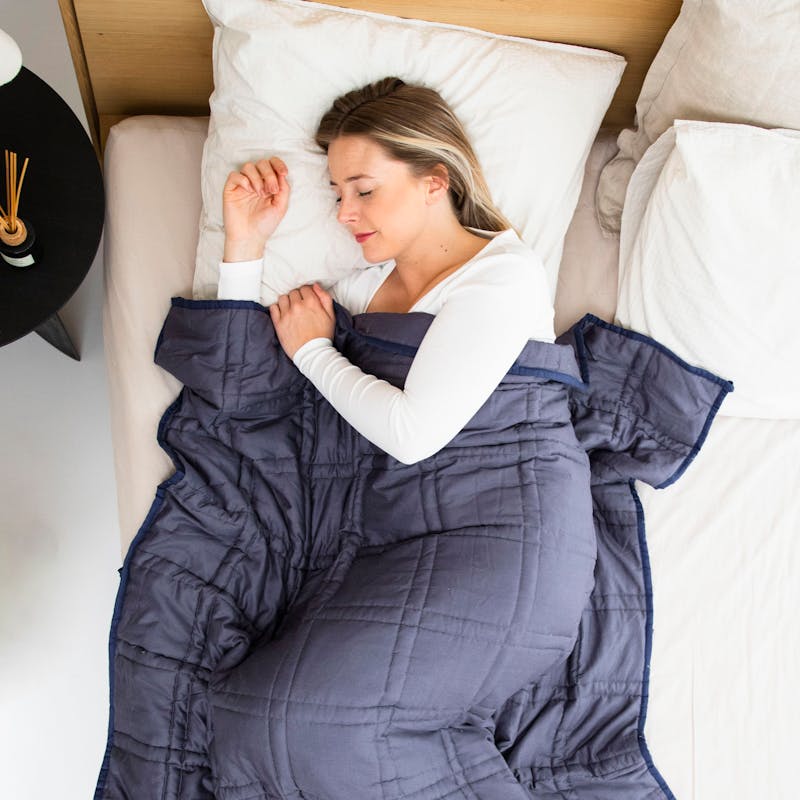
Night can be quiet, but your mind doesn’t always get the memo.
Sleep is supposed to be the day’s gentle off-ramp—dim lights, slower breathing, a soft landing. Yet for many people, nighttime is when worry gets louder and the body feels strangely alert. Sleep anxiety often shows up right at the moment you most want calm, turning bed into a stage for “what if” thinking, clock-checking, and a tense scan of your own body.
This is a look at why that happens and what actually helps. Not in the sense of “try harder to relax,” but in understanding the mechanics: how the brain learns to associate bed with effort, why the stress system doesn’t respond to logic at 2 a.m., and how small changes can rebuild trust in sleep over time.
What is sleep anxiety, really?
Sleep anxiety is persistent worry or dread about falling asleep, staying asleep, or the consequences of poor sleep—often paired with physical tension. It can feel like a mental loop (“If I don’t sleep, tomorrow will be a disaster”) or a bodily one (heart racing, tight chest, restless limbs) that makes drifting off harder.
It’s different from the occasional restless night. The defining feature is the anticipation: evening arrives and your system braces, as if sleep were a test you might fail.
Why does calm vanish at bedtime?
The frustrating paradox is that bedtime removes distractions. During the day, conversations, tasks, and movement keep the nervous system busy. At night, there’s space—so your brain does what it evolved to do in quiet moments: review threats, scan for problems, predict outcomes.
Add a few modern ingredients—bright screens, irregular schedules, late caffeine, nonstop news—and the brain stays in “day mode” longer than it should.
Then there’s the pressure. When sleep becomes precious, it becomes performative. You start monitoring it. The more you monitor, the more you activate the very system that prevents sleep: the sympathetic “up” response.
The sleep effort trap: when bed becomes a battleground
Many people with sleep anxiety can trace the shift to a stretch of bad nights: a stressful month, illness, a new baby, travel, a deadline. At first, the sleeplessness is situational. But then the brain begins to learn an association: bed equals struggle.
That conditioning can happen quickly. If you repeatedly lie in the dark feeling wired, the brain treats the bed like a cue for alertness—similar to how a particular song can summon a memory. Soon, getting into bed triggers a familiar sequence: anticipation, body scanning, checking the clock, and trying to force drowsiness.
Trying to force it is understandable—and counterproductive. Sleep is a passive process. Effort tends to signal danger to the nervous system, which interprets danger as a reason to stay awake.
Is sleep anxiety just stress, or something else?
Sometimes it’s straightforward stress. But sleep anxiety can also be intertwined with other patterns. The quickest answer: it’s often stress plus a learned fear of wakefulness.
A few common overlaps include:
- Generalized anxiety: the same mental habits that fuel daytime worry show up at night.
- Panic symptoms: falling asleep can feel like “losing control,” which can trigger a surge of adrenaline.
- Depressive rumination: the mind replays regrets or predicts bleak outcomes in the quiet.
- Insomnia disorder: when sleep disruption and worry about it persist for months.
Medical contributors matter too. Reflux, chronic pain, perimenopausal symptoms, restless legs sensations, or sleep apnea can fragment sleep and unintentionally teach the brain to expect another rough night.
What actually helps when your mind won’t power down
The goal isn’t perfect serenity. It’s reducing the threat signal your brain attaches to nighttime. The most effective approach is usually behavioral and consistent rather than dramatic.
Start with how you relate to wakefulness. If you’re wide awake for more than about 20–30 minutes, consider getting out of bed and doing something quiet and dim—reading a paper book, stretching gently, listening to a calm audio track. Return to bed when sleepy. This interrupts the bed=awake association and rebuilds bed=sleep.
Try shifting from “sleep performance” to “rest practice.” Tell yourself: My job is to rest my body; sleep will come when it comes. That subtle change reduces the internal fight.
A few other anchors can help:
- A consistent wake time, even after a bad night, helps reset sleep drive.
- Light in the morning (outdoor daylight if possible) strengthens circadian timing.
- A wind-down buffer: 30–60 minutes that signals “no more input,” especially from work or social media.
- Caffeine honesty: some people are sensitive even at noon; experiment gently.
If intrusive thoughts are the main issue, a “worry appointment” earlier in the evening can be surprisingly effective: set a timer, write the worries down, and jot one next step for each. It doesn’t solve everything; it teaches your brain it won’t be ignored—just not at midnight.
Rebuilding trust in sleep over time
Sleep anxiety often improves when you treat it like a retraining process rather than a flaw. Think of your nervous system as learning two new lessons: night is safe, and wakefulness isn’t catastrophic.
That second lesson matters. When the brain believes wakefulness is dangerous—because it will “ruin tomorrow”—it keeps you vigilant. Ironically, many people function better than they fear, even after a short night. Not optimally, but adequately. Noticing that you can still get through a day takes heat out of the next night.
Professional support can accelerate the process. Cognitive behavioral therapy for insomnia (CBT-I) has strong evidence behind it and focuses directly on the sleep effort trap, conditioned arousal, and unhelpful beliefs about sleep. If you suspect apnea, panic attacks, or medication effects, medical evaluation is worth it; removing a physical disruptor can lower nighttime alarm quickly.
A quieter definition of success
The real measure of progress isn’t “I fell asleep instantly.” It’s the moment bedtime feels less loaded—when you can lie down without negotiating with your thoughts. When you stop checking the clock like it’s a verdict. When you wake at 3 a.m. and feel a flicker of irritation, but not fear.
Sleep tends to return the same way trust returns in any relationship: through repeated, ordinary experiences of safety. And sometimes the most calming thought at night is also the most practical one—you don’t have to win sleep; you just have to make room for it.