A suitcase closes; the mind stays open.
Travel can feel like a highlight reel—quick photos, quick meals, quick goodbyes. But the moments that actually change you often arrive quietly: the long train ride, the museum bench, the walk back to your room after dinner.
That’s where travel journaling prompts come in. They give shape to experiences that might otherwise blur together, helping you notice patterns, name feelings, and capture details your camera can’t. Whether you keep a slim notebook or type notes on your phone, prompts turn “I went” into “I learned,” and “I saw” into “I understood.”
Why prompts matter on the road
Unstructured journaling is powerful, but travel can overwhelm the page. There’s pressure to record everything—every street, every meal, every attraction—until writing starts to feel like homework.
Prompts lower the barrier. They offer a single thread to follow when you’re tired, overstimulated, or unsure what’s worth remembering. Over time, that thread becomes a record not only of places, but of how you move through them—your comfort zones, your curiosities, your triggers, your small joys.
Travel journaling prompts for reflective trips
Start with a question that fits the moment you’re in. The best prompt is the one that makes you pause before you answer.
On arrival, try: What do I notice first—and what does that say about what I’ve been craving?
During exploration: What detail would I miss if I were rushing? Describe it in a way that makes it impossible to forget.
After a conversation: What did I learn about how I come across to strangers? What felt easy, and what felt effortful?
At the end of the day: What surprised me today—pleasantly or painfully—and why?
In a difficult moment: What story am I telling myself right now? What evidence do I have for a kinder story?
When something delights you: If I could bottle one sensory moment from today—sound, smell, light—what would it be?
These aren’t meant to produce perfect prose. They’re meant to produce honesty.
What should you write about when nothing “big” happens?
Write about the small stuff. Quiet days are where meaning collects. Focus on texture, rhythm, and inner shifts rather than attractions.
Try answering one of these in two or three sentences:
What did today feel like in my body—heavy, light, tense, spacious?
What did I do slowly on purpose?
What ordinary thing here feels unfamiliar, and what familiar thing feels new?
What am I avoiding thinking about, and what keeps tapping my shoulder anyway?
Who was I before this trip started, and who am I rehearsing becoming?
If your day was mostly logistics—maps, lines, missed turns—write about how you responded. Patience, irritation, adaptability, self-talk: that’s the real travel story.
Prompts that sharpen memory and sensory detail
A good travel journal doesn’t just list where you went; it recreates being there. Sensory prompts pull you out of summary mode and back into the scene.
Describe a color you saw today that you can’t name. Where was it, and why did it stop you?
Write the “soundtrack” of one location: the loudest sound, the softest sound, and the most constant sound.
Describe a meal as if the reader has never tasted any of the ingredients.
What did the air feel like—dry, salty, metallic, warm? What did it carry?
Choose one object you handled today (a ticket, a coin, a key). What story did it silently tell?
These prompts are especially useful when you’re traveling somewhere you might return to; later, they become a time machine.
Prompts for solitude, homesickness, and emotional weather
Trips can bring up tenderness you didn’t plan for. A new place can widen your world and, at the same time, make you miss the old one.
When you feel lonely: What kind of connection do I need—conversation, touch, shared silence, familiarity? What’s one small way to seek it kindly?
When you miss home: What exactly am I missing—a person, a routine, a feeling of competence? How could I create a tiny version of that here?
When you feel restless: What am I chasing right now? What might happen if I stopped chasing for an hour?
When you feel brave: What fear did I carry earlier that feels smaller now? What changed?
These reflections don’t “solve” emotions. They give them a place to land.
Turning prompts into a habit you’ll keep
The secret isn’t discipline; it’s making journaling easy to start. Keep your expectations small and your tools simple.
Choose a recurring moment: the first coffee, the last five minutes before bed, the ride back from sightseeing.
Use a gentle structure: one sentence about what happened, one about how it felt, one about what it might mean.
Let prompts rotate. If you’re using travel journaling prompts every day, repeat the ones that keep yielding something new. A prompt that “worked” once often reveals a different answer in a different city.
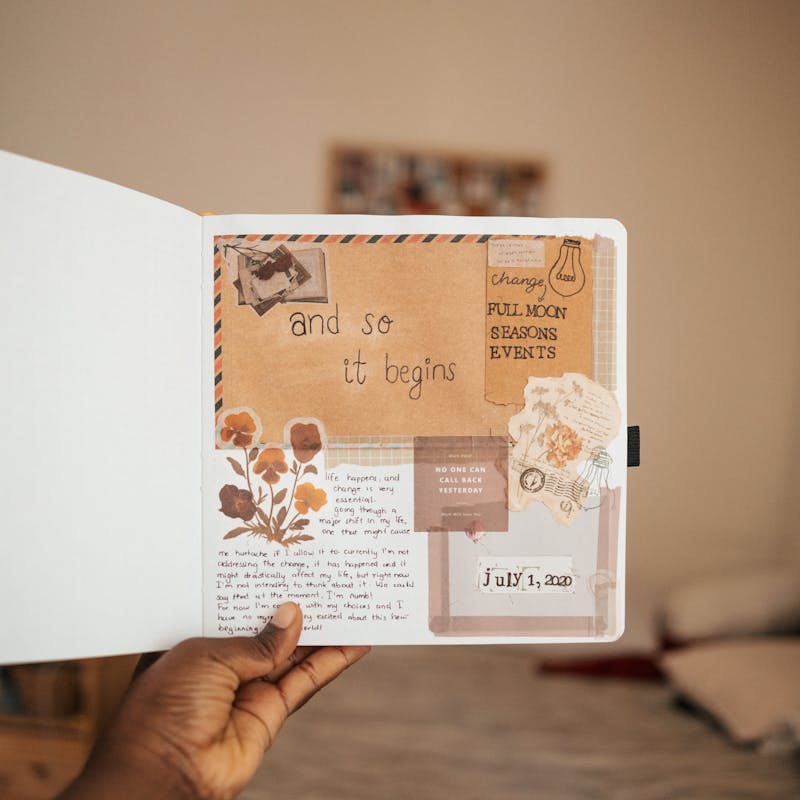
And don’t worry about writing in order. A travel journal can be a scrapbook of fragments: overheard phrases, tiny sketches, receipts, one-line realizations.
A quieter kind of souvenir
Years from now, you probably won’t remember the exact route you took through a market. You’ll remember the moment you realized you were capable of navigating it. You won’t recall every landmark, but you’ll recall the afternoon light on a wall, or the way your shoulders dropped when you finally stopped trying to “do it all.”
The point of travel journaling prompts isn’t to prove you went somewhere. It’s to meet yourself in motion, and to leave a trail of words you can follow back to what mattered—especially in the quiet moments, when the trip becomes more than a trip.