It started as a flicker in a dim room, and somehow became the main light in our lives.
The screen’s story doesn’t begin with Silicon Valley gloss or sleek product launches. It begins with tinkering—hands stained with grease and ink, minds stubborn enough to believe that light could be taught to hold a picture. Long before the screen became a thing we carried, it was a contraption people gathered around, unsure whether to laugh at it or lean closer.
What’s striking, looking back, is how quickly a novelty became a habit. Then a need. Then an atmosphere.
The early thrill of “Can this even work?”
In the beginning, the screen was less an object than a question.
Inventors and mechanics treated moving images like a puzzle that demanded patience. Early demonstrations were often rough and temperamental, prone to breakdowns and distortion. Yet the imperfection was part of the magic. It wasn’t just entertainment; it was proof that reality could be captured, segmented, and replayed.
Imagine the sensation of watching something repeat—not as memory, not as a story retold, but as an event revived. That repetition alone was a kind of power.
What made the screen feel radical wasn’t only what it showed, but that it showed anything at all. The first audiences weren’t trained to expect realism or narrative arcs. They were watching possibility learn to stand.
When public spectacle turned private routine
The screen’s first major role was communal.
People went out to see it. They arranged evenings around it. A screen was a destination, a place where strangers sat shoulder-to-shoulder and agreed, without saying so, to look in the same direction. In those rooms, the screen functioned like a public square—except the square spoke, and everyone listened.
But the screen didn’t stay public for long.
As the technology became more practical and more affordable, it crossed a crucial threshold: it entered the home. And when it entered the home, it changed not only what people watched, but how they arranged their lives.
Furniture began to orient itself around a glowing rectangle. Meals adjusted their timing. Conversation learned to coexist with a background hum of voices from elsewhere. The screen stopped being an event and became a presence.
That shift—spectacle to routine—may be the most important step in the screen’s ascent. A thing you plan for is powerful. A thing you live beside is transformative.
The screen as storyteller—and editor of reality
Once the screen became a household fixture, it evolved into something deeper than a device.
It became a storyteller with endless stamina. It could deliver the same messages to millions, shaping shared references and shared jokes. It could establish a cultural “now,” a sense that everyone was watching the same world unfold.
But it also became an editor.
A screen doesn’t simply show reality; it frames it. It selects angles, compresses time, emphasizes certain faces, repeats certain phrases. It teaches viewers what to notice and what to ignore. Even when the content is “live,” the viewer still receives a version of events that has already been structured.
That framing became so natural that many people stopped seeing it as framing at all. The screen’s greatest trick was making mediation feel like direct experience.
The quiet shift from watching to participating
For a long time, the screen was one-way.
You watched. You listened. You absorbed. Even when you argued about it later, the screen itself remained indifferent. It didn’t respond.
Then interactivity arrived—not all at once, but like a door gradually opening.
Computers brought a new relationship to the screen: the screen became a workspace, a tool, a surface where decisions could be made and undone. Video games turned the viewer into an actor, someone whose timing and choices mattered. The screen stopped being a window and started acting like a room you could enter.
And once you can enter, you can leave traces.
That detail changed everything. It meant the screen could remember you. It could adjust to you. It could offer you more of what you seemed to want, and less of what you didn’t.
The screen became less like a broadcast and more like a conversation—except it wasn’t a conversation with another person. It was a conversation with a system.
The pocket-sized revolution and the end of “elsewhere”
The most decisive leap in the screen’s ascent was portability.
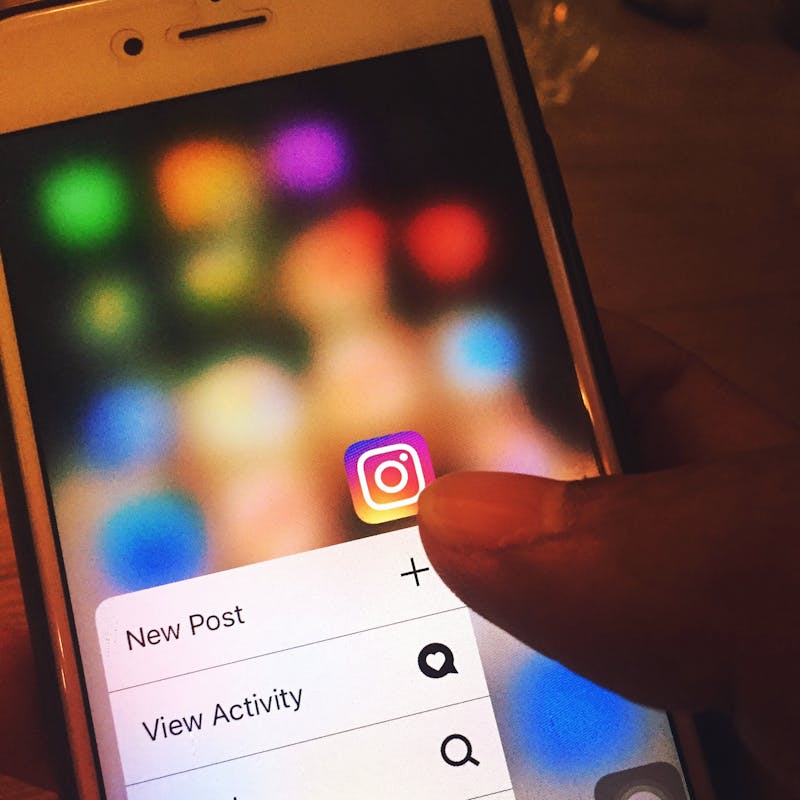
When the screen shrank enough to fit in a pocket, it didn’t just become convenient. It became constant. The screen stopped being a place you went to and became a thing that followed you.
That changed the emotional texture of daily life.
Waiting rooms, sidewalks, grocery lines—moments once filled with idle observation or quiet impatience became opportunities to check, scroll, and respond. The screen turned “dead time” into “available time,” and in doing so, it placed a soft expectation on every spare second.
There’s a particular modern scene that captures this shift.
A group of friends sits at a table, laughing. A phone buzzes. Someone glances down, just briefly, but the glance has weight. The room doesn’t collapse, the conversation doesn’t end, yet a small thread has been tugged. Attention has learned to split.
The screen made “elsewhere” accessible at all times. And once elsewhere is always available, the here-and-now has to compete.
The economics of attention: why obsession was almost inevitable
Obsession didn’t spread solely because screens are fascinating. It spread because fascination became profitable.
As screens connected to networks, they became pipelines for information and advertising, for entertainment and commerce. Companies learned that the scarcest resource wasn’t content—it was attention. And the screen was the most efficient machine ever built for capturing it.
This is where design meets psychology.
Notifications, infinite feeds, autoplay, algorithmic recommendations—these features didn’t emerge by accident. They emerged because they work. They reduce the friction between desire and gratification. They keep the mind in a state of near-resolution, always one more tap away from a new answer, a new image, a new hit of novelty.
The screen became less like a tool you use and more like an environment that uses you—at least some of the time.
That doesn’t mean every moment on a screen is manipulative or hollow. It means the default settings of the modern screen often pull toward more: more time, more engagement, more emotional reaction.
Intimacy at scale, loneliness in high definition
One of the screen’s most surprising powers is its ability to simulate closeness.
A face on a screen can feel familiar. A voice in your earbuds can feel like a companion. A constant stream of updates can create the sensation that you are surrounded by people, even if you’re physically alone.
And yet, the same mechanisms can intensify loneliness.
When connection is frictionless, it can become thin. When interaction is measured in likes and views, self-expression can start to feel like performance. When everyone seems to be living loudly, quietly living can feel like falling behind.
The screen didn’t invent insecurity, envy, or isolation. But it offered them new stages, brighter lighting, and relentless comparison.
At the same time, it offered real gifts.
For many, the screen has been a lifeline: communities found across distance, knowledge accessed without gatekeepers, creativity shared without permission. The screen can be a mirror, a megaphone, a bridge.
It’s both. That’s the point.
The screen as a second climate
If you step back far enough, the screen begins to look less like a device and more like a condition.
We don’t only use screens; we plan around them, interpret ourselves through them, and sometimes measure our days by what happened on them. A screen can turn a private thought into public language. It can compress years of learning into a weekend of tutorials. It can make history feel immediate and distant at the same time.
In many lives, the screen has become a second climate—an always-on atmosphere of information, temptation, and noise.
And like any climate, it shapes behavior subtly.
People speak in shorter bursts. They anticipate being recorded. They learn to see moments as potential posts. They look for proof that something happened, because proof travels better than experience.
The screen rewards what is legible and repeatable. That can be beautiful when it spreads art or truth. It can be dangerous when it flattens complexity into slogans.
What the ascent asks of us now
The screen’s long ascent wasn’t a single invention; it was a gradual rearrangement of human life.
It took curiosity from workshops and turned it into a global architecture of attention. It transformed light into narrative, narrative into habit, habit into dependency for some, and into opportunity for others. It made the world feel smaller while making the self feel more exposed.
The question now isn’t whether the screen will go away. It won’t.
The question is what kind of relationship we will insist on having with it.
There’s a quiet difference between a screen that serves as a tool and a screen that becomes a default. Between choosing to look and feeling unable to stop. Between using it to deepen a life and using it to avoid one.
If the screen began as a flicker that made people gather in wonder, maybe the most human move we can make is to recover that sense of intentionality. Not the naïve wonder that believes every new image is progress, but the grounded wonder that asks what an image is doing to us, and what we want to do with it.
Because the screen’s ascent has been long, but it isn’t finished.
And the next step—whether it becomes gentler, stranger, more humane, or more consuming—will be shaped not only by engineers and executives, but by ordinary choices made in ordinary moments: the decision to look up, to stay present, to let a silence remain unfilled, to treat the glowing rectangle as remarkable again, rather than inevitable.