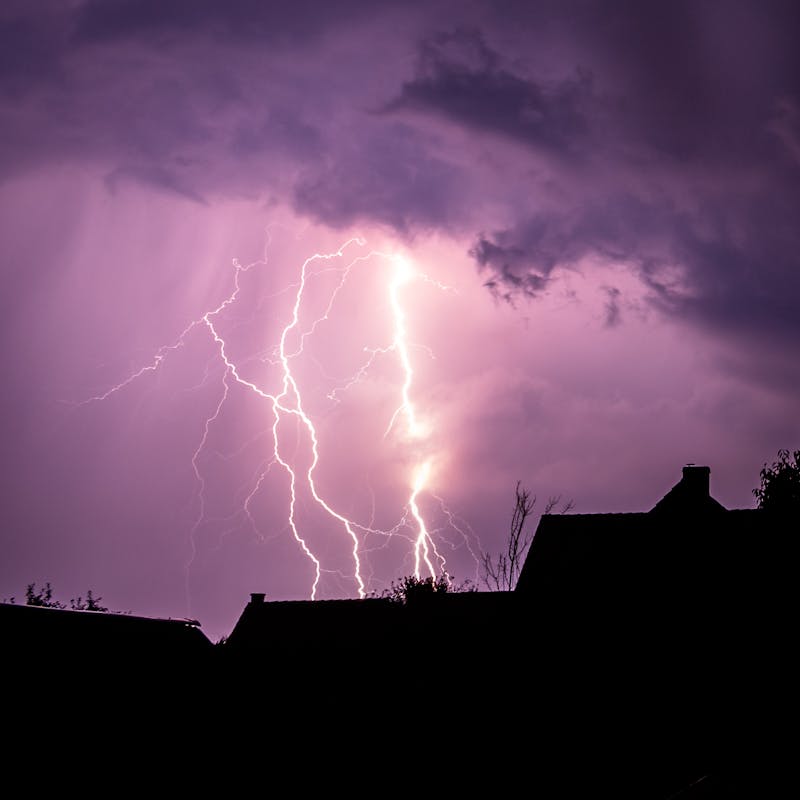
The world is quiet—until it isn’t.
There’s a particular kind of silence that comes before a storm, the one that feels less like peace and more like a held breath. The air seems to thicken. Birds vanish into the trees. Even people, usually so eager to fill every gap with noise, pause without realizing why.
We talk about nature as if it’s a gentle backdrop—something decorative outside our windows or something we drive to on weekends. But nature isn’t scenery. It’s a living system, constantly balancing, adjusting, improvising.
And sometimes, when pushed too far or too fast, that system stops accommodating us.
The myth of a calm, forgiving planet
A lot of modern life is built on an assumption: that the environment will absorb whatever we throw at it. That it will take our exhaust, our pavement, our bulldozers, our heat, our waste, and keep humming along.
We rarely say this out loud, but we act it out daily. The grocery store stays stocked. The lights come on. The tap water tastes the same. The seasons keep their familiar rhythm—until, suddenly, they don’t.
When nature “loses its patience,” it isn’t throwing a tantrum. It’s reaching a point where the old equilibrium can’t hold. The processes that used to soften extremes—wetlands soaking up water, forests cooling the air, reefs breaking wave energy—are weakened or missing.
The result doesn’t feel like a gentle correction. It feels like a door slamming.
When weather stops behaving like weather
Most people have a personal memory of “normal” weather. It’s less scientific than it is sensory: the usual winter bite, the expected spring rains, the summer heat that comes with a predictable start and end.
But lately, the familiar patterns are harder to find.
Heat waves last longer and arrive earlier, turning cities into radiators that never cool at night. Rain falls in strange bursts—either too little for too long or too much all at once—because a warmer atmosphere can hold more moisture and then release it violently. Storms intensify in ways that make old comparisons feel obsolete.
You can feel it in small moments. A sidewalk that stays hot well past sunset. A thunderstorm that seems to dump a month’s worth of rain in an hour. The uneasy sensation that the forecast has become less of a plan and more of a warning.
Nature losing patience often looks like weather losing its manners.
Water: the negotiator that finally quits
Water has always been the great mediator. It moves heat around the planet, feeds crops, shapes landscapes slowly enough that humans can adapt. It’s patient. It finds a way.
Until the system is forced into extremes.
Drought is not just “no rain.” It’s soil that turns to powder, vegetation that becomes tinder, rivers that drop so low they expose old secrets—shipwrecks, foundations, debris that hasn’t seen daylight in decades. It’s farmers making impossible calculations and communities arguing over allocations that used to be ample.
Flooding is the opposite face of the same problem. When land is hardened by pavement, stripped of roots, and drained of wetlands, water can’t seep in. It rushes.
And rushing water doesn’t just damage homes. It changes what people believe is safe. It reshapes maps and insurance policies. It redraws the line between “rare” and “expected.”
When water stops negotiating, it starts dictating.
Fire as a symptom, not just a disaster
Wildfire used to be discussed like a seasonal event—tragic, yes, but contained to certain regions and predictable windows. Now it feels more like a persistent condition.
Longer dry seasons, hotter temperatures, and shifting precipitation patterns create landscapes ready to burn. Add decades of land management choices, expanding development into fire-prone areas, and the simple fact that there are more ignition sources in more places, and the equation changes.
Fire becomes less about one spark and more about the background state of the world.
What’s striking about modern fire seasons is how they bend everyday life. Smoke turns sunlight into an eerie orange. People check air quality like they once checked temperature. Kids stay inside, not because of rain, but because breathing outdoors is suddenly a risk.
Nature losing patience looks like a sky that doesn’t know how to be blue.
The oceans, holding their heat—and their grudges
The ocean has been doing us a quiet favor for a long time: absorbing vast amounts of excess heat. It’s one reason warming hasn’t felt even more extreme on land.
But favors come with limits.
As the ocean warms, it expands. Sea levels rise not as an abstract global number, but as a monthly nuisance that becomes a yearly crisis: sunny-day flooding, saltwater creeping into freshwater systems, storm surges reaching farther inland.
Warmer oceans also change marine life. Fish shift their ranges. Coral reefs, already stressed, can bleach when temperatures spike. The underwater world—so out of sight that it’s easy to forget—begins to reorganize.
Coastal communities feel it first. A familiar beach narrows. A dock floods at high tide. The “hundred-year storm” shows up twice in a decade.
Nature losing patience can look like water slowly reclaiming what we assumed was ours.
The quiet collapse: when ecosystems stop performing for us
Not all of nature’s impatience arrives with drama. Some of it is subtle, and therefore easier to ignore.
A forest can look green and still be unwell. A river can appear full and still be ecologically hollow. A landscape can hold the shape of health while losing its function.
When insect populations drop, it doesn’t make headlines the way a hurricane does. But it shows up later, in fewer birds at dawn, in gardens that don’t fruit as reliably, in crops that require more human intervention to pollinate.
When biodiversity declines, ecosystems often become less resilient. They’re less able to handle stress, less able to bounce back. Like a workplace where only a few people know how to do everything, a simplified ecosystem can fail suddenly if one key element disappears.
Nature losing patience sometimes looks like absence.
Cities as amplifiers of natural anger
It’s tempting to frame these changes as something that happens “out there,” in remote forests or distant coastlines. But modern cities are not sealed off from the natural world. They’re deeply entangled with it.
Cities intensify heat through dark surfaces and dense structures that trap warmth. They channel water through drains that can be overwhelmed. They rely on faraway reservoirs, power grids, and supply chains that are vulnerable to disruption.
When extremes hit, the inequality of exposure becomes impossible to ignore. Neighborhoods with fewer trees and more asphalt become hotter. Older housing struggles to stay cool. People without flexible jobs can’t easily evacuate or recover.
Nature losing patience doesn’t treat everyone equally, but it reveals how unevenly we’ve built our sense of safety.
The psychology of living in a world that won’t settle
There’s a strange emotional toll to environmental instability. It’s not just fear during disasters; it’s the ongoing uncertainty.
You start to notice how often people talk about the weather now, not as small talk but as a low-grade alarm system. You notice the way parents weigh whether it’s safe for kids to play outside on certain days. You notice how vacations are planned with contingency routes, backup plans, and a quiet question: will this place still be here the way I remember it?
Over time, the unpredictability erodes trust—not just in forecasts, but in the idea that the future will resemble the past.
That loss of continuity can make people either numb or hyper-alert. Neither is a comfortable way to live.
What patience would look like, if we asked for it
If nature’s “patience” is really the ability of systems to buffer shocks, then restoring patience is not a poetic idea. It’s practical.
It looks like giving rivers room to flood safely instead of forcing them into narrow channels that fail catastrophically. It looks like planting trees and protecting urban canopy so that heat doesn’t become a routine health emergency. It looks like designing buildings and infrastructure that assume volatility rather than stability.
It also looks like reducing the pressures that are pushing systems toward the edge: cutting pollution that traps heat, protecting habitats that stabilize water and temperature, treating the living world as essential infrastructure rather than optional beauty.
None of this is as cinematic as a storm. It’s quieter work. It’s long work.
But it’s the kind of work that buys time—and with time, options.
The moment after the warning
After an extreme event, there is often a brief, eerie clarity. The air smells different. The neighborhood sounds different. People stand outside and look at things they’ve driven past a hundred times, as if seeing them for the first time.
In that moment, it’s hard to pretend we’re separate from the world that holds us.
Nature losing its patience is not a moral judgment. It’s a feedback loop made visible. A system responding to forces applied.
The question that lingers is not whether nature will calm down. The planet will keep moving, reorganizing, rebalancing, with or without our preferences.
The question is whether we will learn to live as participants instead of spectators—before the next held breath turns into another slam of the door.