Silence isn’t the absence of sound; it’s the return of your own voice.
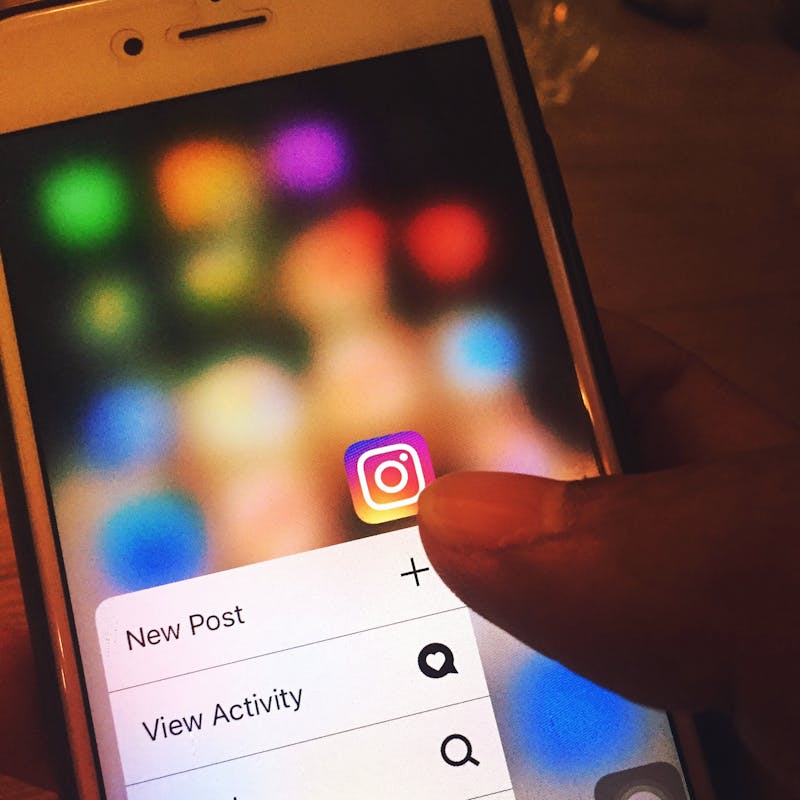
There’s a particular kind of noise that doesn’t register as loud until you step away from it. It isn’t the blare of traffic or the thump of a neighbor’s bass. It’s the steady, low-level buzz of being reachable—always—by little rectangles that glow and chirp and vibrate and flash.
At first it feels like modern life: efficient, connected, quick. Then, slowly, it begins to feel like living inside a hallway where someone keeps calling your name, even when they don’t need anything urgent.
The endless notifications hum doesn’t just interrupt what you’re doing. It reshapes how you think, what you expect from your own attention, and whether you can still hear the quieter signals inside yourself.
The hum that becomes a habitat
Most of us don’t wake up intending to spend our days reacting. It just happens.
A calendar reminder arrives while you’re making coffee. A group chat lights up before you’ve finished swallowing your first sip. A headline pings your lock screen with the subtle menace of “You should know this.” By midmorning, your mind has already practiced a dozen micro-pivots: from task to alert, from alert to message, from message to app.
Over time, the hum becomes background. You stop noticing it the way you stop noticing the refrigerator’s drone. But your nervous system notices. Your attention notices. Your sense of self definitely notices, even if it can’t quite articulate what’s wrong.
The strange part is that the hum often masquerades as care. A notification can be a friend checking in, a coworker needing input, a parent sharing a photo. Real relationships travel through the same channel as marketing, workplace urgency, and algorithmic bait.
When everything arrives in the same font, with the same vibration, the mind learns to treat all incoming stimuli as potentially important. That’s exhausting.
When your inner voice gets crowded out
The loss isn’t dramatic. It’s not like you forget who you are in one sudden moment.
It’s more like the volume of your inner voice gets lowered, one small notch at a time. The part of you that used to narrate your day—your opinions, your preferences, your instincts—starts speaking less because it keeps being interrupted.
You may notice it in tiny ways.
Standing in line, you reach for your phone before you reach for a thought. Walking from the car to the store, you check for updates rather than letting your mind wander. During a lull in a conversation, you fill the silence with scrolling instead of sitting in the ordinary pause of being with someone.
Inner life needs a little frictionless space to surface. It needs boredom. It needs the quiet that feels slightly awkward at first.
Without that space, your mind stays externally oriented. You become fluent in other people’s inputs, less fluent in your own.
The false comfort of constant checking
Notifications often promise relief. If you check, you’ll know. If you respond, you’ll be caught up. If you clear the badges, you’ll feel clean again.
But the relief is brief because the system is designed to refill. Even if no one is manipulating you intentionally in that moment, the structure is the same: you get a cue, you respond, you receive a small reward—information, connection, completion.
The body learns the pattern. The mind starts requesting the pattern.
And then the quiet becomes suspicious.
When nothing is happening on your phone, you might feel a low-grade unease, as if you’re forgetting something. Not because you are, necessarily, but because your attention has been trained to equate “no inputs” with “something missing.”
This is one of the hardest truths to admit: sometimes we check not because we’re curious, but because we’re uncomfortable being alone with our own thoughts.
Not in a tragic way. In a very normal way.
Thinking can be messy. Feelings can arrive without warning. Unanswered questions can rise up when you stop distracting yourself. Notifications offer a neat alternative: a manageable task, a quick hit of certainty.
The cost: fragmented attention, fragmented self
It’s tempting to describe the problem as distraction. But distraction is only the most visible symptom.
The deeper cost is fragmentation.
If your day is chopped into dozens or hundreds of reactive moments, it becomes harder to build the kind of sustained attention that helps you understand what you actually believe, what you actually want, or what you actually need.
Even joy can get diluted.
A beautiful moment—a meal you cooked, a sunset through the windshield, your pet doing something ridiculous—can turn into content the second your phone is within reach. You think about framing, sharing, captioning. The moment becomes a performance, not an experience.
The self that emerges from constant interruption is often a “responding self.” A self that is good at being available, quick, informed, agreeable, efficient.
But the “listening self” starts to go quiet.
That listening self is where discernment lives. It’s where you recognize that you’re tired rather than pushing through. It’s where you realize you don’t miss a person as much as you miss being younger. It’s where you notice you’re angrier than you thought, or lonelier, or simply overstimulated.
Learning the difference between urgent and important
One reason notifications are so powerful is that they flatten time.
Everything arrives as “now.” A message appears and instantly becomes the present moment’s priority, even if it shouldn’t. Your brain doesn’t automatically know whether a notification is an emergency, a convenience, or a manufactured tug.
That’s why hearing yourself again isn’t only about silencing your phone. It’s about reclaiming your ability to rank what matters.
There’s a subtle dignity in deciding that a thought deserves to finish. That your attention deserves continuity.
It can be as simple as letting a message sit while you complete one paragraph, finish one dish, drive one mile, breathe through one feeling.
When you practice this, you start to remember that you can tolerate a little latency. The world doesn’t collapse when you don’t respond instantly.
Sometimes relationships even improve, because your replies come from a steadier place.
Small scenes of returning to yourself
The first time you reduce the hum, it can feel strangely empty.
You might sit on a couch with your phone across the room and notice that your hands don’t know what to do. You might walk outside and realize how quickly your mind tries to fill space with input.
That’s not failure. That’s your attention recalibrating.
There’s a moment—often small and private—when you start hearing yourself again. It might happen while washing dishes, when you suddenly remember something you’ve been avoiding. Or on a commute, when an old idea returns, not because you searched for it, but because you gave it room.
You might rediscover preferences that had been flattened by the feed.
The music you actually like when no one is watching. The pace you prefer when you’re not trying to keep up. The fact that you don’t miss certain conversations, you miss the comfort of feeling included.
These realizations can be tender. They can also be clarifying in a way that feels almost like grief: for time spent half-present, for friendships maintained through reflexive check-ins rather than real attention, for your own mind treated like a waiting room.
But grief is also a sign that something matters.
Boundaries as a form of self-respect
A common misconception is that turning down notifications is antisocial or irresponsible.
In reality, boundaries are often what make connection possible without burnout.
The simplest boundary is a decision about when you will be reachable, not whether you will be reachable at all. It’s choosing a window in the day when you respond, and honoring the rest of the day as a space for work, rest, or ordinary living.
This isn’t about perfection. It’s about reducing the number of times your mind has to shift gears.
Another boundary is emotional: noticing which alerts trigger you. The ones that make you tense before you even open them. The ones that pull you into comparison, outrage, or panic. Those notifications are not neutral. They carry a cost.
Self-respect can look like refusing to pay that cost repeatedly.
When you protect your attention, you’re not only guarding productivity. You’re guarding your mood, your patience, your capacity for empathy.
You’re protecting the part of you that can sit with a complicated feeling long enough to understand it.
The quiet isn’t empty—it’s textured
One surprise of getting away from the hum is that quiet has layers.
At first it’s raw, like stepping out of a loud restaurant and hearing your ears ring. But then it becomes textured. You start noticing small sounds: the creak of a floorboard, a far-off lawnmower, the shift of your own breathing.
Your mind, too, becomes textured.
Instead of jumping from stimulus to stimulus, it starts forming longer arcs. You remember things. You plan gently. You reflect without immediately narrating it to someone else.
This is often where creativity returns, not as a lightning bolt, but as a slow rehydration.
You begin to have opinions that aren’t responses. Desires that aren’t influenced by what other people seem to be doing. Ideas that don’t need to be posted to feel real.
You may also notice discomfort you had been drowning out.
Quiet can reveal how tired you are. How overloaded. How much you’ve been bracing. That can be hard, but it’s also the beginning of care. You can’t tend to what you can’t hear.
Hearing yourself again as a daily practice
The goal isn’t to live like a monk in the woods, nor to treat technology as the villain of your life.
The goal is to make your attention feel like it belongs to you again.
Some days that will mean turning off a few nonessential alerts. Other days it will mean leaving your phone in another room so you can finish a thought. Sometimes it will mean letting someone be mildly disappointed that you didn’t reply immediately.
It will also mean learning to sit in the spaces you used to fill.
Waiting for the elevator without checking. Eating without scrolling. Standing at the sink and letting your mind drift. Going for a walk where the only updates are weather, light, and the shifting mood of your own body.
These moments sound small because they are small.
That’s what makes them powerful. They’re accessible. They’re repeatable. They teach your brain that you can be safe without constant input.
A reflective ending: what becomes audible when the hum fades
When the notifications quiet down, you don’t become a new person. You become more available to the person you already are.
You start noticing what you’re drawn to when you’re not being pulled. You hear the subtle “no” you used to override. You recognize the gentle “yes” that arrives without adrenaline.
And perhaps the most comforting discovery is this: your inner voice hasn’t disappeared.
It’s been waiting.
Not in some dramatic, mystical way, but in the practical way a mind waits for a pause in the conversation. Give it a little room, and it starts speaking in complete sentences again—sometimes uncertain, sometimes brave, often wiser than the endless hum ever was.