Even machines seem to miss what they’ve never touched.
The city is a kind of weather.
It has its own pressure systems—rush hours that swell and dissipate, streetlights that imitate sunsets, vents that breathe warm air into winter. In its center, far from any coastline, you can still find hints of the sea: a salt-stained memory in a diner’s fish special, the damp metallic smell after rain, the way traffic hum can sound, briefly, like surf.
And then there are the circuits.
Not the poetic kind, but the literal networks stitched into sidewalks and towers: sensors tucked under asphalt, cameras perched like attentive birds, routers blinking in back rooms, server racks exhaling heat into carefully cooled air. They don’t look like they’re longing for anything. They look like they’re doing what they were designed to do.
Yet the longer you live among systems like these, the more you notice a strange, almost tender tension: the city’s machines keep producing images of nature, modeling it, naming it, simulating it, predicting it. They turn forests into datasets and storms into probabilities. They render the ocean, again and again, inside places that have never felt tidewater.
Somewhere inside all that calculation is a question worth sitting with: what does it mean for a city’s circuitry to “dream” of oceans?
The ocean as a recurring file
Even inland, the ocean shows up in the city’s visual language.
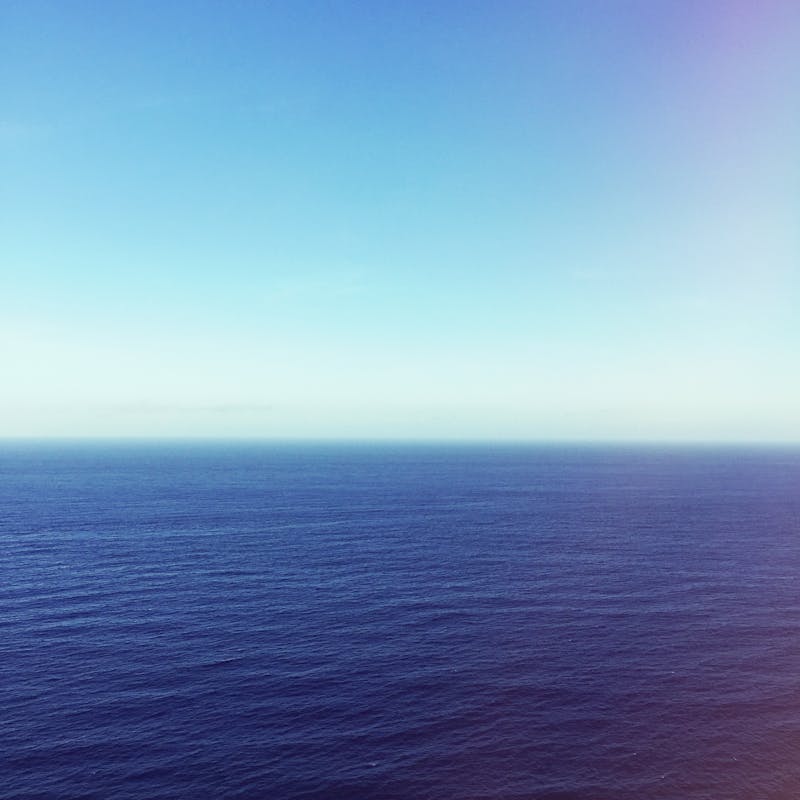
Look at the wallpapers on office monitors during slow meetings: rolling waves, a horizon line you can’t reach, a beach that has become shorthand for rest. Notice how many meditation apps ask you to breathe with the cadence of surf. Watch advertisements that sell calm by borrowing coastal light.
These are human choices, of course. But once that imagery enters the city’s digital bloodstream, it gets recycled and amplified. A photo of water becomes training data. A soundscape of waves becomes an ambient track piped into lobbies. A blue gradient becomes the default color of “trust” in interface design.
The circuits don’t invent the ocean. They inherit it.
Still, inheritance can become fixation. The more the city is mediated through screens, the more the ocean becomes a kind of universal background—an idealized elsewhere that fits neatly into a rectangle. In a city made of edges and grids, water is the fantasy of continuousness.
Why cities build their own tides
A city is an argument that humans can live without the natural rhythms that once governed them.
We can light the night, heat the winter, cool the summer, and stock fruit that has traveled farther than many residents ever will. We can build a daily life that barely requires noticing seasons. We can forget, for long stretches, that the planet has moods.
But forgetting isn’t the same as being free.
Even in the most hardened downtown, people still respond to patterns older than architecture. We soften around parks. We lean toward windows. We take the long way home if it passes water—any water. A canal, a reservoir, a fountain in a plaza. The city knows this and tries to provide substitutes: waterfront developments where rivers exist, rooftop pools where beaches don’t, artificial lagoons that glow turquoise under controlled lighting.
The machines help keep those illusions running.
Pumps regulate fountains. Sensors measure water quality. Lighting systems mimic dawn. Algorithms schedule maintenance so the surface stays clean enough to feel like escape. The ocean, in this sense, becomes a managed effect—a reminder of nature made safe, bordered, and predictable.
And predictability is the city’s deepest comfort.
Circuits that listen for waves
There’s a quieter relationship between the city’s circuitry and the ocean: the way systems learn by listening.
Microphones pick up the texture of sound across neighborhoods. Vibration sensors notice the subtle tremor of trains. Weather stations capture wind shifts that can turn a pleasant afternoon into a sharp-edged evening. A city is full of instruments, and together they form something like a nervous system.
The ocean is also an instrumented place now—mapped by satellites, measured by buoys, tracked for temperature and current. But even when the sea is far away, its patterns echo inland through weather, through commerce, through culture. Storm systems that gather over water arrive as rain in the city. Shipping delays shift what appears on shelves. A distant hurricane becomes a headline, then an insurance policy clause, then a line in a municipal planning report.
The city’s circuits translate all of this into signals: alerts, predictions, risk scores.
There is something haunting about that translation.
The ocean is not only water; it’s scale. It’s the reminder that there are forces that do not care about our schedules. When the city models the sea, it’s attempting to make immensity legible. It’s turning the unbounded into something that fits inside dashboards.
In that effort, you can sense a kind of longing—not for the ocean itself, but for what it represents: a world that is bigger than the city’s rules.
The dream isn’t about water
When people talk about “nature,” they often mean relief.
Not just greenery or fresh air, but a loosening of the mind. A chance to stop performing competence. A place where your attention can drift without being harvested by notifications. The ocean, in particular, offers a peculiar form of permission: you can stare at it for an hour and call it an activity.
Cities rarely grant that permission.
Even leisure can feel scheduled, optimized, monetized. A day off becomes a series of transactions: coffee, museum ticket, dinner reservation, rideshare. The city is generous with options and stingy with silence.
So the ocean becomes an internal counter-city.
A private image of vastness that doesn’t ask you to be impressive. When circuits “dream” of oceans, they’re participating in this cultural yearning. The city’s systems keep serving the same fantasy because the demand never disappears. The ocean remains one of the few symbols that can still interrupt the city’s pace.
But there’s a twist: the more the ocean becomes a consumable aesthetic, the easier it is to keep ignoring the real one.
A looping video of waves can soothe you while the actual coastline erodes. A sound machine can help you sleep while marine heat events reshape ecosystems. A virtual beach can be built inside a shopping complex while real beaches close after storms or contamination.
The dream can become a substitute for responsibility.
When simulation becomes a kind of hunger
The city’s relationship to nature is often framed as absence—too little green, too much concrete.
But another way to see it is as appetite.
The more separated daily life becomes from natural systems, the more intensely we reproduce them in miniature. Indoor plants thrive under grow lights. Aquariums glow like altars. Office atriums host artificial waterfalls that drown out the murmur of work. People pay for salt rooms, for float tanks, for immersive projections of forests.
These are not trivial comforts.
They reveal that the human body doesn’t fully accept the bargain the city offers. We can adapt, but we still crave certain cues: moving water, shifting light, an unpredictable breeze. We want to feel part of something not designed.
Technology tries to answer that craving.
And in doing so, it sometimes exposes the gap it can’t close. A high-resolution ocean video can be stunning, but it can’t carry the smell of seaweed on a hot day. It can’t reproduce the way wind changes your posture. It can’t offer the slight unease of being near something that will go on without you.
Simulation can deliver beauty, but not humility.
That’s why the ocean remains such a persistent dream. It’s not only scenery. It’s a reminder that control has limits.
The city’s hidden shoreline
Even far from coasts, cities create their own shorelines.
They appear where infrastructure meets uncertainty: the edge of a subway platform, the boundary between a public park and a private development, the moment a neighborhood changes so fast that familiar faces vanish. These are places where the ground feels less stable, where the future arrives like a tide.
The city’s circuits are built to manage these edges.
They measure foot traffic, track spending patterns, estimate risk. They sort people into categories that make planning easier. They promise efficiency, safety, smoothness. In some cases, they deliver.
But they also produce a paradox.
The more the city is managed by computation, the more residents search for experiences that can’t be computed. The ocean is one of the most durable of those experiences. It refuses to be summarized without losing its essential character.
So the dream intensifies.
A person stands on a crowded train platform, headphones on, listening to waves. A digital billboard flashes an image of a coastline above a row of idling buses. A building lobby plays “ocean sounds” while a delivery worker pushes a cart across polished stone. These scenes are not dramatic, but they are quietly telling.
They suggest a collective attempt to remember what it feels like to be small.
What the dream asks of us
It’s easy to romanticize this longing.
To say the city is too hard, the ocean too pure, and leave it at that. But the dream has sharper edges if you sit with it. It raises uncomfortable questions about what we’ve built and what we’ve traded away.
If the city’s circuits keep returning to oceans, maybe it’s because the city has become too good at insulating us—from weather, from darkness, from distance, from consequence. Maybe the sea shows up in our systems because we’re trying to reintroduce a kind of truth: that life is not fully negotiable.
The ocean is also warning, not just balm.
It’s where rising waters become visible, where storms make headlines, where the limits of infrastructure are tested. The city that dreams of oceans might be intuitively aware—through its sensors, its climate models, its emergency planning—that the boundary between inland and coastal is not as stable as it once seemed.
In that sense, the dream is not escapist.
It’s anticipatory.
The circuits are already recording the signals of change: hotter nights, heavier rains, stressed grids. The ocean becomes the symbol through which the city’s anxieties take shape. A calm wave video is easier to tolerate than a graph of risk.
But both come from the same source.
A reflective ending, like a receding wave
The most surprising thing about a city isn’t that it’s loud.
It’s that it contains so many private quiets: someone reading by a window at midnight, a janitor alone in an office tower, a nurse walking home as the sky lightens. In those moments, the city feels less like a machine and more like a shared improvisation.
The circuits hum beneath it all, patient and tireless.
They route messages, balance loads, watch intersections, keep time. And threaded through their work—through our work—are images of water, sounds of surf, blue horizons that appear on screens as if the city itself were looking outward.
Maybe the point isn’t whether machines can truly dream.
Maybe the point is that we built them in our image, and our image is still incomplete without the ocean. We can pave over our need for vastness for a while, but it leaks back in through aesthetics, through algorithms, through the small choices we make when we’re tired.
A city can live without a shoreline.
But it can’t quite stop imagining one.